Earthquake Damage Database

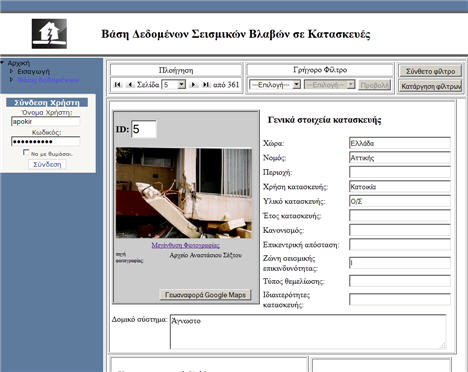
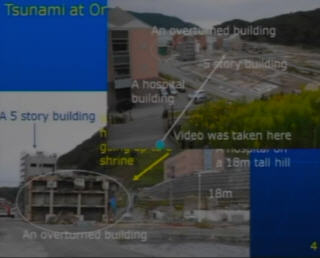
The Earthquake Damage Database has been launched, featuring a visual and fully searchable catalogue of structural damage due to earthquake loading in Greece. The database contains more than 300 photos with seismic-related metadata, georeference (where availlable) and commentary and aims to act as a visual educational tool for undergraduate and young Civil Engineers. Currently it is available only in Greek.
Official Website: http://asptetk.civil.auth.gr/Pages/Home.aspx
For further info or in case you are interested to submit your earthquake damage-related photos please contact: asextos@civil.auth.gr

New high performance computational system at the Department of Civil Engineering

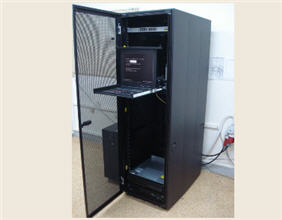
A new computational system has been setup at the Department of Civil Engineering of Aristotle University Thessaloniki, Greece and will officially kick-off operation on December 14th, 2012. The HCOUPER (High COmputational University PERformance) is an integrated
system, aiming to provide computational services to the members of the Department with research interests in running applications that are demanding in computational time, storage capacity and
memory usage. It is a multi-user environment running both Linux & Windows
OS by dynamically allocating computational resources where needed. More information may be found at: http://hcouper.weebly.com

L’Aquila sentence: Press Release of the Hellenic Association for Earthquake Engineering

PRESS RELEASE
=============
It is with
great regret that we have been informed about the primary conviction of
seven Italian scientists, considered responsible for the loss of human life
during the recent earthquake in L’Aquila. With deepest respect for each and
every human life lost due to this natural disaster, the Hellenic Society for
Earthquake Engineering, would like to note the following:

– It is
commonly accepted within the scientific community worldwide, that there cannot
be a short-term prediction of earthquakes, nor can it be an accurate
determination of the space, time and intensity of a future seismic event. For
this reason, it is practically impossible to take any essential precaution
measures for the protection of citizens in an area that is sufficiently narrow
and within a reasonably short period of time. Citizens and the State ought to
know the limits of scientific knowledge and to accept the large uncertainties
associated with the prediction of seismic activity, which is unfortunately
still impossible to overcome. From a scientific point of view and in accordance
with all international guidelines and state-of-practice, the Italian colleagues
acted as any other scientist would have in a similar position.
– The
criminalization of the inherent scientific inability to exceed the current
state of knowledge, is not only unjust for the persons in charge of the Italian
National Commission for the Forecast and Prevention of Major Risks, who have
contributed at a great extent in the mitigation of seismic risk. It is expected
to inactivate all relevant Civil Protection Departments in Italy and worldwide,
which will be reluctant to act in the future based on actual data. This phobic
crisis management may also result into a seriously misleading assessment of the
probabilistic nature of seismic hazard. This fact alone may have severe
consequences on the economic and social life of all regions exposed to seismic
risk internationally. Most importantly, it raises serious questions regarding
the way in which the State and society view the scientific progress as a whole.
Based on
the above, we would like to express the full and unreserved support of the
Hellenic Department of Earthquake Engineering to the convicted colleagues. We
do hope that the Italian Authorities will beneficially assess the validity of
our allegations.

Prof.
Kyriazis Pitilakis                                                                                                                                                     

Chairman
of the HSEE 
Assist. Prof. Anastasios Sextos
Secretary of HSEE 

HELLENIC  SOCIETY 
for
EARTHQUAKE  ENGINEERING [ HSEE ]
Member  of 
the  Ιinternational  Association 
for  Earthquake  Engineering
 

Enhanced by Zemanta

Minisymposium in ““Software Development in the Field of Earthquake Engineering and Structural Dynamics”

SUB

A minisymposium is organised in the framework of the 4th
International Conference on Computational Dynamics and
Earthquake Engineering
COMPDYN 2013
(www.compdyn2013.org)
:

Software Development in the Field of Earthquake Engineering and Structural Dynamics”.
 

Organizer:  Anastasios Sextos (Aristotle University of Thessaloniki, Greece)
 
e-mail:  asextos@civil.auth.gr
 descriptionThe mini-symposium
will focus on recent advances in software development for
Earthquake Engineering and Structural Dynamics purposes.
More specifically, it will encourage contributions that
will
demonstrate new
software applications, web-based engineering tools, frameworks for
hybrid simulation and distributed computing,
knowledge-based & expert
systems
,
finite
element programs, numerical analysis pre- and post- processing
front-ends, data and metadata dissemination and management
systems, high performance, parallel and cloud computing schemes,
applications for mobile devices and tablets as well as GIS-based
visualization tools. Emphasis will be primarily (but not
exclusively) given to the application of the above software
systems towards
the
mitigation of seismic risk, the design and assessment of
earthquake resistant buildings and bridges, the assessment of
special and monumental structures,
system identification and structural health
monitoring
, performance-based engineering, seismic
isolation and control of structures, dynamic soil-structure
interaction
, strong ground motion selection and scaling as well as
seismic wave propagation through the soil media. It is envisioned that the Symposium will constitute a forum
on the recently developed earthquake-engineering-related software
that will facilitate the dissemination of knowledge and promote the
interaction and cooperation between the developers and the
end-users.

A complete list of other interesting Minisymposia can be found here 

IN ORDER TO SUBMIT YOUR ABSTRACT PLEASE USE MINI-SYMPOSIUM CODE: MS-25-CZ

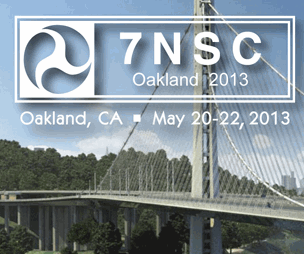
Seventh National Seismic Conference on Bridges & Highways (7NSC) “Bridge Resilience for Earthquakes and Other Natural Hazards”

Oakland,
California has been selected as the site of the Seventh National
Seismic Conference on Bridges & Highways (7NSC). The event will be
held May 20-22, 2013 at the Oakland Marriott City Center. The conference
theme is “Bridge Resilience for Earthquakes and Other Natural Hazards,”
indicating a broad scope. There will be presentations and discussions
of multiple hazards that may affect the performance of highway
infrastructure. California was chosen by the Federal Highway
Administration
(FHWA) to host this conference based on the state’s past
experience with earthquakes and the Department of Transportation’s
(Caltrans) leadership in the field. 
D2BS98J4TVJZ
Co-organizers
of the conference are USDOT Federal Highway Administration,
Transportation Research Board, American Association of State Highway and
Transportation Officials
’ Subcommittee on Bridges and Structures
(AASHTO), and earthquake research centers PEER-UC Berkeley, and MCEER,
University at Buffalo.
The
2013 conference builds upon previous successful meetings that have been
held in San Diego, Sacramento, Portland, Memphis, San Mateo, and
Charleston, SC. Based on past trends, attendance is expected to exceed
400 and will include representatives from private engineering practice,
government, construction, academia, and industry. This conference is a
premier gathering of transportation officials responsible for addressing
and mitigating the impact of all hazards on our highway infrastructure.
On
Sunday May 19, 2013, an optional pre-conference technical workshop will
be held. The main program will be held over the next 2½ days with over
75 oral and poster presentations, discussion panels, and a student
design competition. Several internationally renowned keynote speakers
are being invited to share information about some of the major
earthquakes that have occurred in other parts of the world in recent
years. In addition, a special session is planned that will highlight the
design and construction of the soon to be complete San Francisco –
Oakland Bay Bridge
, with emphasis on the unique self-anchored suspension
span. An optional technical tour will also be provided.
In
the days prior to the 7NSC, FHWA is planning to hold the First
International Bridge Seismic Workshop, also in Oakland. Dr. W. Phillip
Yen, FHWA Principal Bridge Engineer – Structural Dynamics, is Chairman
of the 7NSC and the International Workshop.

For more information, visit the conference web site.

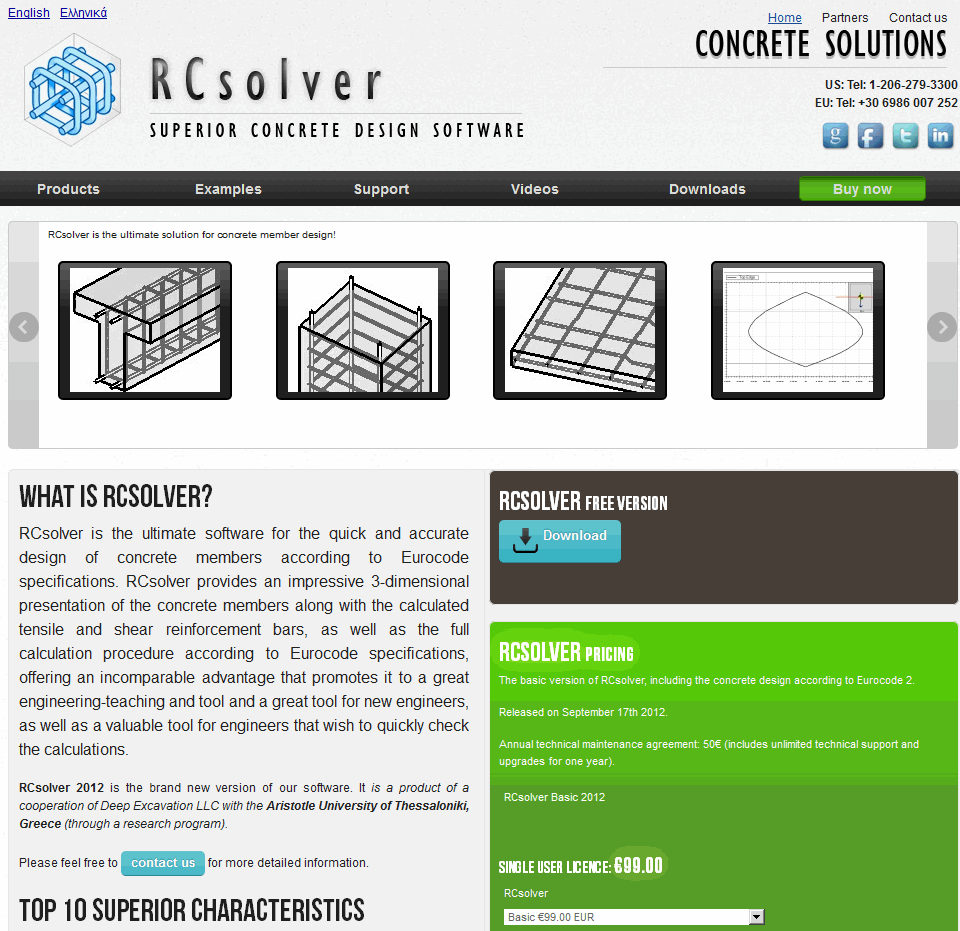
RCSolver Concrete design software to Eurocodes

RCsolver is a software for
the quick and accurate design of concrete members according to Eurocode
specifications (primarily 2 and 8). RCsolver provides a 3-dimensional
presentation of the concrete members along with the calculated tensile
and shear reinforcement bars, as well as the full calculation procedure
according to Eurocode specifications, acting as a great engineering-teaching as well as a valuable tool for engineers that
wish to quickly check their calculations. 

RCSolver free version is available at the software website

Symposium on “Seismic assessment and retrofit of bridges”

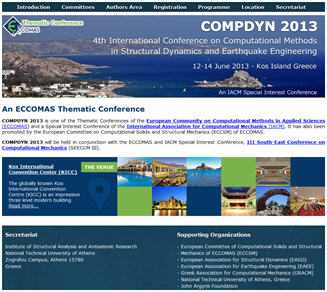
Symposium on “Seismic assessment and retrofit of bridges” is being organized by Prof. Andreas Kappos, within the framework of the COMPDYN 2013 conference http://www.compdyn2013.org/ that is organized under the auspices of the European Community on Computational Methods in Applied Sciences (ECCOMAS) and the International Association for Computational Mechanics (IACM). This is the fourth conference in the COMDYN series and will take place from 12 to 14 June 2013 at the Kos International Convention Centre (KICC) in the beautiful island of Kos.

An abstract of no more than an A4 page can be submitted by 29 October 2012, following the instructions given at the Conference website (see address above) and making sure that you indicate that the abstract is submitted for MS14 (Mini-Symposium 14)

The Symposium will focus on the seismic assessment and retrofit of bridges, with emphasis on analytical/computational methods that fit well the scope of COMPDYN, but relevant experimental studies will also be welcome; presentations will include, among others, recent work carried out on this topic by members of two international groups dealing with this issue, the EAEE Task Group 11 ‘Seismic design, assessment, and retrofit of Bridges’(http://eaee-tg11.weebly.com), and the IABSE Working Group 7 ‘Earthquake Resistant Structures’ (http://ftpiabapp1.fishtech.net/imis15/IABSE/IABSE_Association/Committees/Technical_Groups/Working_Groups/WG7/IABSE/association/Committee_files/Technical/WG/WG7.aspx?hkey=b469e271-7732-480c-94dd-22e2d3f6f7f3).

It is aimed that the Symposium will constitute a forum for the exchange of research results and ideas on currently available procedures and their applicability to the seismic assessment and retrofit of bridges. As such, pertinent issues such as modelling of bridge members strengthened using different techniques, modelling of interfaces, calibration of models against tests results, etc, will be amongst the topics open to debate and scrutiny. Hence the Symposium will provide a valuable contribution to the further development and implementation of methodologies for the seismic assessment and retrofit of bridges and contribute to risk reduction in these critical structures.

Impressive new exhibit at the California Academy of Sciences in San Francisco

Director Stephen Mahin’s recent research test for the NEEStips project at the nees@berkeley lab is featured in a new exhibit at the California Academy of Sciences in San Francisco.  The new exhibit, called “EARTHQUAKE: Life on a Dynamic Planet,” explores the seismic science that has shaped Earth’s evolution and continues to impact our lives today.

A key feature of the new exhibit is the Earthquake planetarium show, in the largest all-digital planetarium in the world.  The show explores the forces that transform the earth’s surface by examining the San Andreas Fault and San Francisco’s 1906 earthquake.  The show concludes with a focus on how engineers today help buildings resist earthquake shaking safely and highlights the benefits of earthquake resisting features, such as seismic isolation.

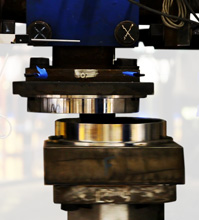
The nees@berkeley staff and researchers worked closely with the California Academy of Sciences to film the seismically isolated two bay, two story specimen that was being tested on nees@berkeley’s new hybrid shaking table.  The final resulting footage used in the planetarium show depicts the specimen being shaken as it zooms into a close up to one of the isolators.  If you go to see the planetarium show, be sure to look for the nees@berkeley team in the credits!

For more information about research highlighted in the planetarium show, watch an interview with Professor Mahin about the NEEStips testing at UC Berkeley.  Professor Keri Ryan of University Nevada, Reno is the PI of the NEEStips research program.

For more information about the California Academy of Science exhibit, visit the “EARTHQUAKE: Life on a Dynamic Planet” website.

To watch the Academy’s “Science in Action” video trailer highlighting the filming process and the importance of earthquake engineering research at PEER and nees@berkeley, visit the ScienceToday website.