
At intervals inside the elevated roadway’s box girders — which have the
closed-in feel of a submarine, if a submarine were made of concrete —
are anchor blocks, called deadmen, cast into the structure. They are
meant to be used decades from now, perhaps in the next century, when in
their old age the concrete girders will start to sag. By running cables
from deadman to deadman and tightening them, workers will be able to
restore the girders to their original alignment.
Ημερίδα με θέμα: «Κανονισμός Επεμβάσεων (ΚΑΝ.ΕΠΕ.)»
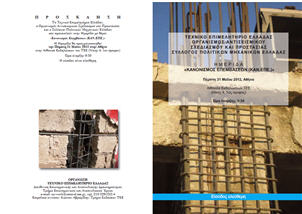
Το Τεχνικό Επιμελητήριο Ελλάδας, ο Οργανισμός Αντισεισμικού Σχεδιασμού και Προστασίας και ο Σύλλογος Πολιτικών Μηχανικών Ελλάδας σας προσκαλούν στην Ημερίδα με θέμα:
«Κανονισμός Επεμβάσεων (ΚΑΝ.ΕΠΕ.)»
Η Ημερίδα θα πραγματοποιηθεί την Πέμπτη 31 Μαΐου 2012 στην Αθήνα στην Αίθουσα Εκδηλώσεων του ΤΕΕ (Νίκης 4, 1ος όροφος)
Ώρα έναρξης 9:30
Η είσοδος είναι ελεύθερη
Hybrid Simulation Workshop at NEES@Berkeley – June 28 & 29

The NEES site at the University of California, Berkeley (UC Berkeley) will host the annual Hybrid Simulation Workshop June 28 and 29, 2012, at its Richmond Field Station.
This
year’s Hybrid Simulation Workshop emphasizes real-time loading,
including demonstrations of our new “smart” dynamic platform. Attendees
will:
year’s Hybrid Simulation Workshop emphasizes real-time loading,
including demonstrations of our new “smart” dynamic platform. Attendees
will:
· Learn the basics of hybrid simulation methods
· Learn about the basic tools OpenSees and OpenFresco
· Conduct several real-time hybrid simulation demonstrations at the NEES@Berkeley equipment site
· Be able to use hybrid simulation in your NEES and non-NEES projects
· Prepare to develop new hybrid simulation tests and algorithms
· Learn
about pros and cons (accuracy, limits, ease of use, field applications
in damage assessment) of modern non-conventional monitoring and
measuring techniques.
about pros and cons (accuracy, limits, ease of use, field applications
in damage assessment) of modern non-conventional monitoring and
measuring techniques.
The registration deadline is June 15. This workshop is offered at no cost to participants.
Limited
travel support is available for graduate students, post-doctoral
researchers, or tenure-track faculty at US schools. Please register and
apply for travel support using the online registration form at the Hybrid Simulation Workshop web page.
Discovering OpenSees: Surfing the Waves of OpenSees
“Parallel & Grid Computing” on May 31 & June 1
The next seminar in the web-based Discovering OpenSees: Surfing the waves of OpenSees
learning series will occur on May 31 and June 1. The session will be
broadcast twice at times that will allow users in all time zones around
the world to participate. This 1-hour session is titled “Parallel &
Grid Computing” and will occur on May 31 at 4:00 pm Pacific Time &
on June 1 at 10:00 am Pacific Time.
learning series will occur on May 31 and June 1. The session will be
broadcast twice at times that will allow users in all time zones around
the world to participate. This 1-hour session is titled “Parallel &
Grid Computing” and will occur on May 31 at 4:00 pm Pacific Time &
on June 1 at 10:00 am Pacific Time.
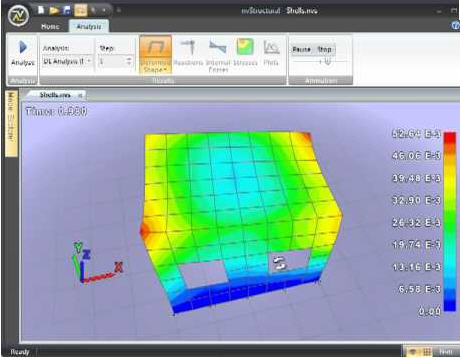
This seminar will provide a brief introduction to Parallel and Grid
Computing with OpenSees using the resources made available to users
through NEEShub.
This seminar covers:
- Introduction to Parallel & Grid Computing
- Parallel Computing With OpenSees
- Running Parallel Examples on NEEShub
- Grid Computing Using Pegasus, the Open Science Grid and OpenSees
- Q&A with web participants
How can I join the seminar?
Register for the seminar on May 31 at 4:00 pm Pacific Time
Register for the seminar on June 1 at 10:00 am Pacific Time
Once registered, you will receive a confirmation email with instructions
for joining the meeting. More information will be posted at the Discovering OpenSees Wiki page.
Ημερίδα Νέων Ερευνητών Ε.Τ.Α.Μ.
Το
Ελληνικό Τμήμα
Αντισεισμικής
Μηχανικής
(Ε.Τ.Α.Μ.)
διοργανώνει,
υπό την αιγίδα
του Τμήματος
Πολιτικών
Μηχανικών της
Πολυτεχνικής
Σχολής του
Αριστοτελείου
Πανεπιστημίου
Θεσσαλονίκης,
ημερίδα που
απευθύνεται
αποκλειστικά
και μόνον σε
νέους
ερευνητές, με
τίτλο:
Ελληνικό Τμήμα
Αντισεισμικής
Μηχανικής
(Ε.Τ.Α.Μ.)
διοργανώνει,
υπό την αιγίδα
του Τμήματος
Πολιτικών
Μηχανικών της
Πολυτεχνικής
Σχολής του
Αριστοτελείου
Πανεπιστημίου
Θεσσαλονίκης,
ημερίδα που
απευθύνεται
αποκλειστικά
και μόνον σε
νέους
ερευνητές, με
τίτλο:
Η
ΑΝΤΙΣΕΙΣΜΙΚΗ
ΜΗΧΑΝΙΚΗ ΜΕΣΑ
ΑΠΟ ΤΗΝ
ΕΠΙΣΤΗΜΟΝΙΚΗ
ΜΑΤΙΑ ΝΕΩΝ
ΕΡΕΥΝΗΤΩΝ ΚΑΙ
ΜΗΧΑΝΙΚΩΝ
ΑΝΤΙΣΕΙΣΜΙΚΗ
ΜΗΧΑΝΙΚΗ ΜΕΣΑ
ΑΠΟ ΤΗΝ
ΕΠΙΣΤΗΜΟΝΙΚΗ
ΜΑΤΙΑ ΝΕΩΝ
ΕΡΕΥΝΗΤΩΝ ΚΑΙ
ΜΗΧΑΝΙΚΩΝ
Σκοπός
της
ημερίδας είναι
η ανάδειξη και
η διάχυση του
έργου της νέας
γενιάς
ερευνητών
και μηχανικών
(μελών ή μη
του ΕΤΑΜ), η
γνωριμία καθώς
και η ανάπτυξη
σχέσεων
συνεργασίας
μεταξύ τους. Η
ημερίδα
απευθύνεται σε
σπουδαστές
(μεταπτυχιακούς,
υποψήφιους
διδάκτορες),
σε διδάκτορες
(έως και 6
χρόνια μετά
την απόκτηση
του
τίτλου), καθώς
και σε
ερευνητές ή
επαγγελματίες
μηχανικούς
κάτω των 38
ετών.
της
ημερίδας είναι
η ανάδειξη και
η διάχυση του
έργου της νέας
γενιάς
ερευνητών
και μηχανικών
(μελών ή μη
του ΕΤΑΜ), η
γνωριμία καθώς
και η ανάπτυξη
σχέσεων
συνεργασίας
μεταξύ τους. Η
ημερίδα
απευθύνεται σε
σπουδαστές
(μεταπτυχιακούς,
υποψήφιους
διδάκτορες),
σε διδάκτορες
(έως και 6
χρόνια μετά
την απόκτηση
του
τίτλου), καθώς
και σε
ερευνητές ή
επαγγελματίες
μηχανικούς
κάτω των 38
ετών.
Η
ημερίδα θα
πραγματοποιηθεί
στην Θεσσαλονίκη
την 7η
Δεκεμβρίου
2012 στο
Κέντρο
Διάδοσης
Ερευνητικών
Αποτελεσμάτων
(ΚΕ.Δ.Ε.Α) του
Αριστοτελείου
Πανεπιστημίου
Θεσσαλονίκης.
Στο
αντικείμενο
της ημερίδας
εμπίπτουν οι
ακόλουθες
θεματικές
ενότητες:
ημερίδα θα
πραγματοποιηθεί
στην Θεσσαλονίκη
την 7η
Δεκεμβρίου
2012 στο
Κέντρο
Διάδοσης
Ερευνητικών
Αποτελεσμάτων
(ΚΕ.Δ.Ε.Α) του
Αριστοτελείου
Πανεπιστημίου
Θεσσαλονίκης.
Στο
αντικείμενο
της ημερίδας
εμπίπτουν οι
ακόλουθες
θεματικές
ενότητες:
o
Κτιριακά
Έργα
Κτιριακά
Έργα
o
Κατασκευές
Μεγάλης
Κλίμακας
(γέφυρες,
φράγματα,
σήραγγες,
κλπ.)
Κατασκευές
Μεγάλης
Κλίμακας
(γέφυρες,
φράγματα,
σήραγγες,
κλπ.)
o
Μνημεία
Μνημεία
o
Γεωτεχνική
Σεισμική
Μηχανική
Γεωτεχνική
Σεισμική
Μηχανική
o
Τεχνική
σεισμολογία
Τεχνική
σεισμολογία
o
Κανονισμοί,
Θέματα
ανάλυσης και
σχεδιασμού
Κανονισμοί,
Θέματα
ανάλυσης και
σχεδιασμού
o Ειδικά
θέματα που δεν
περιλαμβάνονται
σε κάποια από
τις
προηγούμενες
κατηγορίες
π.χ.
σεισμική
τρωτότητα και
διαχείριση της
σεισμικής
διακινδύνευσης
θέματα που δεν
περιλαμβάνονται
σε κάποια από
τις
προηγούμενες
κατηγορίες
π.χ.
σεισμική
τρωτότητα και
διαχείριση της
σεισμικής
διακινδύνευσης
Γνωρίζοντας
την
επιστημονική
σας ενασχόληση
με μία ή και
περισσότερες
από τις
παραπάνω
θεματικές
ενότητες,
παρακαλούμε
για την άμεση
προώθηση του
παρόντος στους
συνεργάτες σας
(υποψήφιοι
διδάκτορες,
μεταδιδακτορικοί,
ελεύθεροι
επαγγελματίες
μηχανικοί
κλπ).
την
επιστημονική
σας ενασχόληση
με μία ή και
περισσότερες
από τις
παραπάνω
θεματικές
ενότητες,
παρακαλούμε
για την άμεση
προώθηση του
παρόντος στους
συνεργάτες σας
(υποψήφιοι
διδάκτορες,
μεταδιδακτορικοί,
ελεύθεροι
επαγγελματίες
μηχανικοί
κλπ).
ΥΠΟΒΟΛΗ
ΣΥΜΜΕΤΟΧΩΝ
ΣΥΜΜΕΤΟΧΩΝ
Οι
ανακοινώσεις
που θα
παρουσιαστούν
πρέπει να
είναι
πρωτότυπες και
να εμπίπτουν
στο πεδίο της
Αντισεισμικής
Μηχανικής
γενικότερα,
και ειδικότερα
σε μία από τις
παραπάνω
θεματικές
ενότητες. Οι
εργασίες
δύναται να
είναι ατομικές
ή ομαδικές.
Παρακαλούνται
όσοι
ενδιαφέρονται
να υποβάλουν
περίληψη
έκτασης έως
μία σελίδα σε
ψηφιακή μορφή
(e-mail: youngresearchers01@gmail.com),
ακολουθώντας
τις οδηγίες
για τη σύνταξη
των
περιλήψεων,
μέχρι τις 30
Ιουνίου 2012.
Η διάρκεια των
προφορικών
ανακοινώσεων
δεν θα
υπερβαίνει τα
10 λεπτά της
ώρας, ενώ
προβλέπεται
και ειδική
συνεδρία με poster.
Όλες οι
περιλήψεις,
στην τελική
τους
διαμόρφωση, θα
περιληφθούν σε
ειδικό τόμο
περιλήψεων
ηλεκτρονικής
μορφής (CD–ROM)
και θα
αναρτηθούν
στην
ιστοσελίδα του
ΕΤΑΜ.
ανακοινώσεις
που θα
παρουσιαστούν
πρέπει να
είναι
πρωτότυπες και
να εμπίπτουν
στο πεδίο της
Αντισεισμικής
Μηχανικής
γενικότερα,
και ειδικότερα
σε μία από τις
παραπάνω
θεματικές
ενότητες. Οι
εργασίες
δύναται να
είναι ατομικές
ή ομαδικές.
Παρακαλούνται
όσοι
ενδιαφέρονται
να υποβάλουν
περίληψη
έκτασης έως
μία σελίδα σε
ψηφιακή μορφή
(e-mail: youngresearchers01@gmail.com),
ακολουθώντας
τις οδηγίες
για τη σύνταξη
των
περιλήψεων,
μέχρι τις 30
Ιουνίου 2012.
Η διάρκεια των
προφορικών
ανακοινώσεων
δεν θα
υπερβαίνει τα
10 λεπτά της
ώρας, ενώ
προβλέπεται
και ειδική
συνεδρία με poster.
Όλες οι
περιλήψεις,
στην τελική
τους
διαμόρφωση, θα
περιληφθούν σε
ειδικό τόμο
περιλήψεων
ηλεκτρονικής
μορφής (CD–ROM)
και θα
αναρτηθούν
στην
ιστοσελίδα του
ΕΤΑΜ.
Για
περισσότερες
πληροφορίες
απευθυνθείτε
στην
ιστοσελίδα του
ΕΤΑΜ (www.eltam.gr).
περισσότερες
πληροφορίες
απευθυνθείτε
στην
ιστοσελίδα του
ΕΤΑΜ (www.eltam.gr).
Με
εκτίμηση,
Τα
μέλη της
οργανωτικής
ομάδας:
μέλη της
οργανωτικής
ομάδας:
Αδάμη
Χρυσή-Ελπίδα
: adamis@central.ntua.gr
Αντωνιάδης
Παναγιώτης: panton@3dr.eu
Γαρίνη
Ευαγγελία: geocvemp@yahoo.gr
Καρατζέτζου
Άννα: akaratze@civil.auth.gr
Ευαγγελία: geocvemp@yahoo.gr
Καρατζέτζου
Άννα: akaratze@civil.auth.gr
Προσεισμικοί έλεγχοι – Τρωτότητα Κατασκευών

Το ζήτημα της τρωτότητας των κατασκευών είναι το θέμα της ημερίδας που διοργανώνει το ΤΕΕ/ΤΚΜ, με πρωτοβουλία της Ομάδας Εργασίας Αντιμετώπισης Φυσικών Καταστροφών, στις 28 Μαΐου και ώρα 18:00 στο αμφιθέατρό του. Στόχος της ημερίδας είναι η παρουσίαση της σημερινής κατάστασης σε θέματα προσεισμικών ελέγχων και η μελλοντική αντιμετώπιση των προβλημάτων του ελέγχου των υφισταμένων κατασκευών. Παράλληλα θα γίνει ενημέρωση πάνω σε θέματα εκτίμησης της τρωτότητας υφισταμένων κατασκευών με παραδείγματα εφαρμογής και με την παρουσίαση του σωστού τρόπου διάγνωσης δομικής τρωτότητας των αυθαιρέτων κατασκευών. Το πρόγραμμα της εκδήλωσης έχει ως εξής:
18:00-18:15 Προσέλευση – Καφές
Προεδρείο: Λεκίδης Βασίλειος, Ράλλη Πηνελόπη, Ζηκοπούλου Όλια.
18:15-19:45
Χαιρετισμός Προέδρου ΤΕΕ/ΤΚΜ
Χαιρετισμός εκπροσώπου Υ.ΠΥ.ΜΕ.ΔΙ
Χαιρετισμοί εκπροσώπων φορέων
«Εκτίμηση τρωτότητας Κτιριακών Κατασκευών-Βάσεις Δεδομένων»
Κάππος Ανδρέας – Καθηγητής Α.Π.Θ.
«Προσεισμικοί έλεγχοι Κατασκευών-Σημερινή κατάσταση, εμπειρίες»
Πέλλη Ευαγγελία – Διευθύντρια Ο.Α.Σ.Π.
«Διάγνωση και έλεγχος Δομικής Τρωτότητας των αυθαιρέτων Κατασκευών»
Χαιρετισμός Προέδρου ΤΕΕ/ΤΚΜ
Χαιρετισμός εκπροσώπου Υ.ΠΥ.ΜΕ.ΔΙ
Χαιρετισμοί εκπροσώπων φορέων
«Εκτίμηση τρωτότητας Κτιριακών Κατασκευών-Βάσεις Δεδομένων»
Κάππος Ανδρέας – Καθηγητής Α.Π.Θ.
«Προσεισμικοί έλεγχοι Κατασκευών-Σημερινή κατάσταση, εμπειρίες»
Πέλλη Ευαγγελία – Διευθύντρια Ο.Α.Σ.Π.
«Διάγνωση και έλεγχος Δομικής Τρωτότητας των αυθαιρέτων Κατασκευών»
Στυλιανίδης Κοσμάς – Καθηγητής Α.Π.Θ
19.45-20.00 Διάλειμμα-Καφές
20.00-21.00
Προεδρείο: Καρακώστας Χρήστος, Χατζηγώγος Θόδωρος
«Εφαρμογές εκτίμησης Τρωτότητας σε οικισμούς-Συγκρίσεις από Ελληνικούς σεισμούς»
Βασίλης Λεκίδης Δρ. Πολιτικός Μηχανικός
“Ευθύνες Μηχανικών σε σχέση με τον Προσεισμικό και τον έλεγχο αυθαιρέτων”
Γιάννης Βλάχος, Πολιτικός Μηχανικός, μέλος Δ.Σ. Ο.Α.Σ.Π.
Παρέμβαση από ΥΑΣΒΕ
20.00-21.00
Προεδρείο: Καρακώστας Χρήστος, Χατζηγώγος Θόδωρος
«Εφαρμογές εκτίμησης Τρωτότητας σε οικισμούς-Συγκρίσεις από Ελληνικούς σεισμούς»
Βασίλης Λεκίδης Δρ. Πολιτικός Μηχανικός
“Ευθύνες Μηχανικών σε σχέση με τον Προσεισμικό και τον έλεγχο αυθαιρέτων”
Γιάννης Βλάχος, Πολιτικός Μηχανικός, μέλος Δ.Σ. Ο.Α.Σ.Π.
Παρέμβαση από ΥΑΣΒΕ
21.00- 21.30
Θεματικές παρεμβάσεις-Στρογγυλή Τράπεζα– συζήτηση.
The Fourteenth International Conference on Civil, Structural and Environmental Engineering Computing
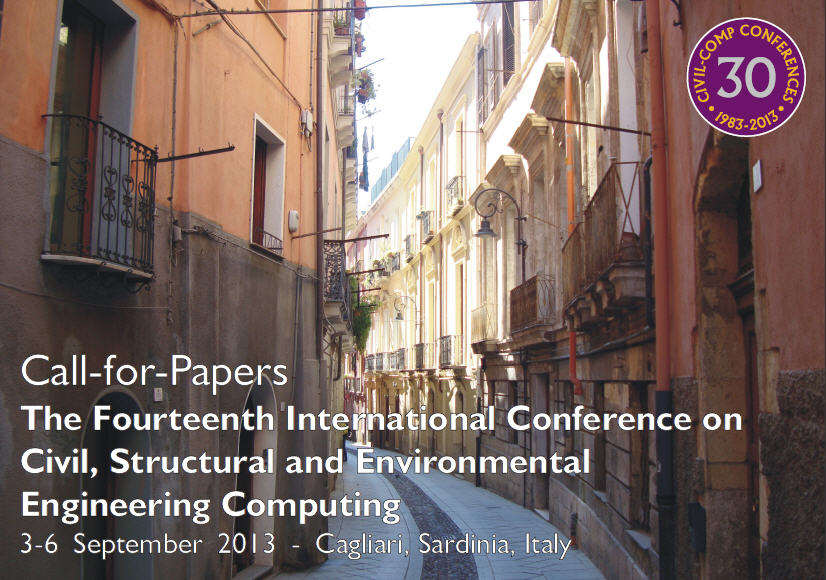
The Fourteenth International Conference on Civil, Structural and Environmental Engineering Computing
3-6 September 2013 – Cagliari, Sardinia, Italy
http://www.civil-comp.com/conf
This is the fourteenth in the CIVIL-COMP series of conferences concerned with the application of computers to civil, structural and environmental engineering. The first Civil-Comp Conference was held in 1983. The conference will provide a forum for the presentation and dissemination of recent developments in the use of computers in civil, structural and environmental engineering. A major objective of the conference will be to link research and innovative ideas to engineering practice. Short to medium length papers describing the application of computers to civil, structural and environmental engineering projects will be particularly welcome. In addition, it is hoped that significant research and review papers on civil, structural and environmental engineering computational research topics will be presented.
The Third International Conference on Soft Computing Technology in Civil, Structural and Environmental Engineering
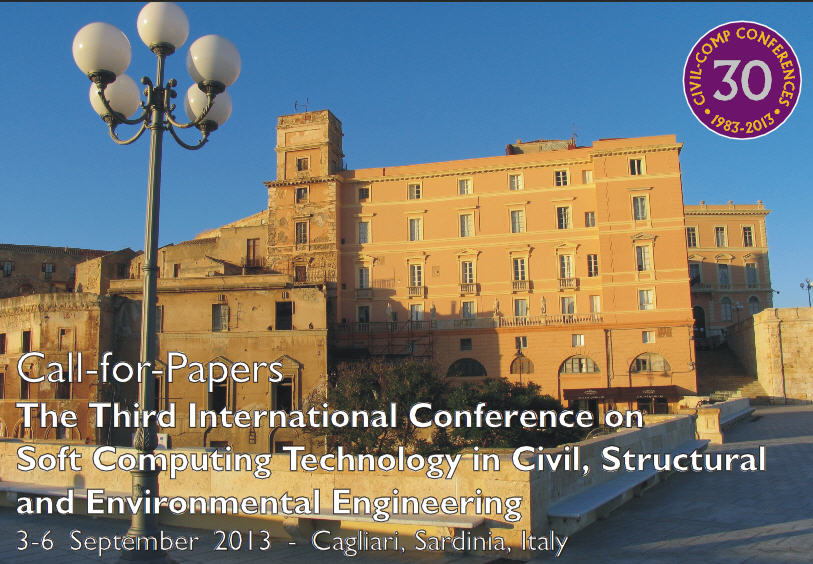
The Third International Conference on Soft Computing Technology in Civil, Structural and Environmental Engineering 3-6 September 2013 – Cagliari, Sardinia, Italy
http://www.civil-comp.com/conf
Topics: Soft computing technology includes aspects of computer science, artificial intelligence, machine learning, evolutionary based methods and tools. Many of the methods employed by soft computing technology are computationally intensive and should therefore only be employed on complex problems that have traditionally proved intractable using more conventional solution methods. The key areas of soft computing covered by this conference include but are not limited to: neural networks; fuzzy systems; genetic algorithms; ant colony optimization; evolutionary algorithms; simulated annealing; harmony search; cellular automata; swarm intelligence; Bayesian networks; chaos theory; data mining; meta-heuristic methods. Papers describing the application of the above techniques to all branches of civil, structural and environmental engineering may be submitted to the conference.
New Oakland Bay Bridge
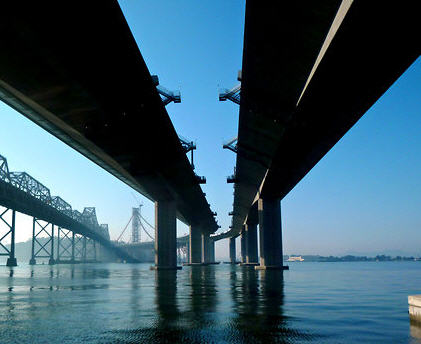
SAN FRANCISCO — Venture deep inside the new skyway of the San
Francisco-Oakland Bay Bridge, and it becomes clear that the bridge’s
engineers have planned for the long term.
The deadmen are one sign that the new eastern span
of the Bay Bridge, which includes the skyway and a unique suspension
bridge, is meant to last at least 150 years after its expected opening
in 2013. (The existing eastern bridge, which is still in use, will then
be torn down.)
of the Bay Bridge, which includes the skyway and a unique suspension
bridge, is meant to last at least 150 years after its expected opening
in 2013. (The existing eastern bridge, which is still in use, will then
be torn down.)
But to make it to the 22nd century, the new span may at some point have
to survive a major earthquake, like the one that destroyed much of San
Francisco in 1906 or the one that partly severed the Bay Bridge in 1989.
With two faults nearby that are capable of producing such large quakes,
survival is no simple matter.
to survive a major earthquake, like the one that destroyed much of San
Francisco in 1906 or the one that partly severed the Bay Bridge in 1989.
With two faults nearby that are capable of producing such large quakes,
survival is no simple matter.
Say what you want about the project — and as the construction timeline
has lengthened past a decade and costs have soared over $6 billion,
plenty has been said — keeping the bridge intact in an earthquake has
always been the engineers’ chief goal.
has lengthened past a decade and costs have soared over $6 billion,
plenty has been said — keeping the bridge intact in an earthquake has
always been the engineers’ chief goal.
And to meet that goal, they are going with the flow: designing flexible
structures in which any potential damage would be limited to specific
elements.
structures in which any potential damage would be limited to specific
elements.
“We wanted to make this bridge flexible so that when the earthquake
comes in, the flexibility of the system is such that it basically rides
the earthquake,” said its lead designer, Marwan Nader, a vice president
at the engineering firm T. Y. Lin International.
comes in, the flexibility of the system is such that it basically rides
the earthquake,” said its lead designer, Marwan Nader, a vice president
at the engineering firm T. Y. Lin International.
That contrasts with another potential approach: making the bridge
structures large enough, and rigid enough, to resist movement. “Massive
and stiff structures would look absolutely ugly and be very, very
expensive,” said Frieder Seible, dean of the Jacobs School of
Engineering at the University of California, San Diego, who tested many
elements of the bridge design.
structures large enough, and rigid enough, to resist movement. “Massive
and stiff structures would look absolutely ugly and be very, very
expensive,” said Frieder Seible, dean of the Jacobs School of
Engineering at the University of California, San Diego, who tested many
elements of the bridge design.
That design includes a 525-foot-tall suspension bridge tower made up of
four steel shafts that should sway in a major earthquake, up to about
five feet at the top. But the brunt of the force would be absorbed by
connecting plates between the shafts, called shear links.
four steel shafts that should sway in a major earthquake, up to about
five feet at the top. But the brunt of the force would be absorbed by
connecting plates between the shafts, called shear links.
The bridge’s concrete piers are designed to sway as well, limiting
damage to areas with extra steel reinforcing. And at joints along the
entire span there are 60-foot sliding steel tubes, called hinge pipe
beams, with sacrificial sections of weaker steel that should help spare
the rest of the structure as it moves in a quake.
damage to areas with extra steel reinforcing. And at joints along the
entire span there are 60-foot sliding steel tubes, called hinge pipe
beams, with sacrificial sections of weaker steel that should help spare
the rest of the structure as it moves in a quake.
“At the seismic displacement that we anticipate, there will be damage,”
Mr. Nader said. “But the damage is repairable and the bridge can be
serviceable with no problems.”
Mr. Nader said. “But the damage is repairable and the bridge can be
serviceable with no problems.”
Emergency vehicles and personnel, at the least, should be able to use
the bridge within hours of a major earthquake, after crews inspect the
structure and make temporary fixes, like placing steel plates over
certain joints. Given that the Bay Area’s two major airports would be
expected to be out of service after such a disaster, this bridge and the
Benicia-Martinez Bridge, another seismically secure span about 20 miles
to the northeast, would be “lifeline” structures to bring assistance to
the stricken region from an Air Force base inland, said Bart Ney, a
spokesman for the California Department of Transportation.
the bridge within hours of a major earthquake, after crews inspect the
structure and make temporary fixes, like placing steel plates over
certain joints. Given that the Bay Area’s two major airports would be
expected to be out of service after such a disaster, this bridge and the
Benicia-Martinez Bridge, another seismically secure span about 20 miles
to the northeast, would be “lifeline” structures to bring assistance to
the stricken region from an Air Force base inland, said Bart Ney, a
spokesman for the California Department of Transportation.
It was an earthquake that made this replacement span, which runs for 2.2
miles between Oakland and Yerba Buena Island in the middle of San
Francisco Bay, necessary. The Loma Prieta quake of 1989, the first to
occur along the San Andreas fault zone since the 1906 disaster, caused
part of the existing steel-truss span to collapse,
killing a motorist. The bridge was closed for a month. That quake, with
a magnitude of 6.9, caused strong shaking that lasted about 15 seconds
and movement far greater than the 1930s-vintage bridge had been designed
to handle.
miles between Oakland and Yerba Buena Island in the middle of San
Francisco Bay, necessary. The Loma Prieta quake of 1989, the first to
occur along the San Andreas fault zone since the 1906 disaster, caused
part of the existing steel-truss span to collapse,
killing a motorist. The bridge was closed for a month. That quake, with
a magnitude of 6.9, caused strong shaking that lasted about 15 seconds
and movement far greater than the 1930s-vintage bridge had been designed
to handle.
Πηγή: New York Times
ΚΑΝΕΠΕ: Βασικά δεδομένα αποτίμησης και σχεδιασμού
Σεμινάριο για την χρήση του ΚΑΝΕΠΕ, Καβάλα 16/12/2011