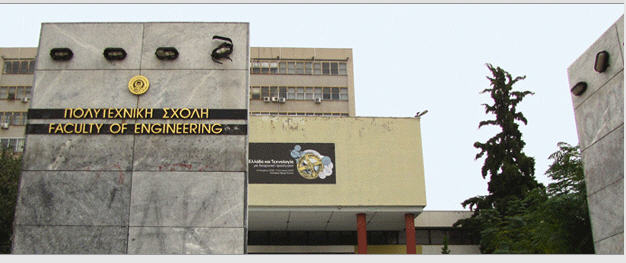
Sextos, A.G. (2013) “A Paperless Course on Structural Engineering Programming: investing in educational technology in the times of the Greek financial recession”, European Journal of Engineering Education.
This paper presents the structure of an undergraduate course entitled ‘programming techniques and the use of specialised software in structural engineering’ which is offered to the fifth (final) year students of the Civil Engineering Department of Aristotle University Thessaloniki in Greece. The aim of this course is to demonstrate the use of new information technologies in the field of structural engineering and to teach modern programming and finite element simulation techniques that the students can in turn apply in both research and everyday design of structures. The course also focuses on the physical interpretation of structural engineering problems, in a way that the students become familiar with the concept of computational tools without losing perspective from the engineering problem studied. For this purpose, a wide variety of structural engineering problems are studied in class, involving structural statics, dynamics, earthquake engineering, design of reinforced concrete and steel structures as well as data and information management. The main novelty of the course is that it is taught and examined solely in the computer laboratory ensuring that each student can accomplish the prescribed ‘hands-on’ training on a dedicated computer, strictly on a 1:1 student over hardware ratio. Significant effort has also been put so that modern educational techniques and tools are utilised to offer the course in an essentially paperless mode. This involves electronic educational material, video tutorials, student information in real time and exams given and assessed electronically through an ad hoc developed, personalised, electronic system. The positive feedback received from the students reveals that the concept of a paperless course is not only applicable in real academic conditions but is also a promising approach that significantly increases student productivity and engagement. The question, however, is whether such an investment in educational technology is indeed timely during economic recession, where the academic priorities are rapidly changing. In the light of this unfavourable and unstable financial environment, a critical overview of the strengths, the weaknesses, the opportunities and the threats of this effort is presented herein, hopefully contributing to the discussion on the future of higher education in the time of crisis.
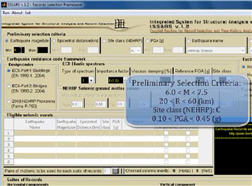
Current practice enables the design and assessment of structures in earthquake prone areas by performing time history analysis with the use of appropriately selected strong ground motions. This study presents a Matlab-based software environment, which is integrated with a finite element analysis package, and aims to improve the efficiency of earthquake ground motion selection by accounting for the variability of critical structural response quantities. This additional selection criterion, which is tailored to the specific structure studied, leads to more reliable estimates of the mean structural response quantities used in design, while fulfils the criteria already prescribed by the European and US seismic codes and guidelines. To demonstrate the applicability of the software environment developed, an existing irregular, multi-storey, reinforced concrete building is studied for a wide range of seismic scenarios. The results highlight the applicability of the software developed and the benefits of applying a structure-specific criterion in the process of selecting suites of earthquake motions for the seismic design and assessment.
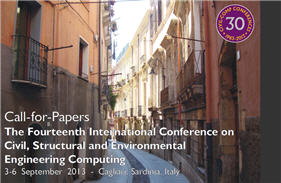
An “Earthquake Engineering” Special Session is organized within the framework of Fourteenth International Conference on Civil, Structural and Environmental Engineering Computing, to be held in Cagliari, Sardinia, Italy between 3-6 September 2013. It is organized by Anastasios Sextos, Assistant Professor at Aristotle University of Thessaloniki.
The Special Session focuses on recent advances in Computational Earthquake Engineering and Structural Dynamics. More specifically, it will encourage contributions related to the mitigation of seismic risk, the design and assessment of
earthquake resistant buildings and bridges, the assessment of
special and monumental structures, system identification and structural health
monitoring, performance-based engineering, seismic
isolation and control of structures, dynamic soil-structure
interaction, strong ground motion selection and scaling as well as
seismic wave propagation through the soil media. Papers related to new software applications, web-based engineering tools, frameworks for
hybrid simulation and distributed computing, knowledge-based & expert
systems, finite
element programs, numerical analysis pre- and post- processing
front-ends, data and metadata dissemination and management
systems, high performance, parallel and cloud computing schemes,
applications for mobile devices and tablets as well as GIS-based
visualization tools are also welcome.
It is envisioned that the Special Session will constitute an interesting forum for scientists using state-of-the-art computational methods and tools for Earthquake Engineering purposes.
Please note that the call for papers closes on the 5th December 2012 and abstracts may be submitted via the conference website: http://www.civil-comp.com/conf/
To encourage young researchers to attend the conference a 1000 Euro Young Researcher Best Paper Prize will be awarded to the best paper presented at each of the conferences. (For further details please see the conference website).
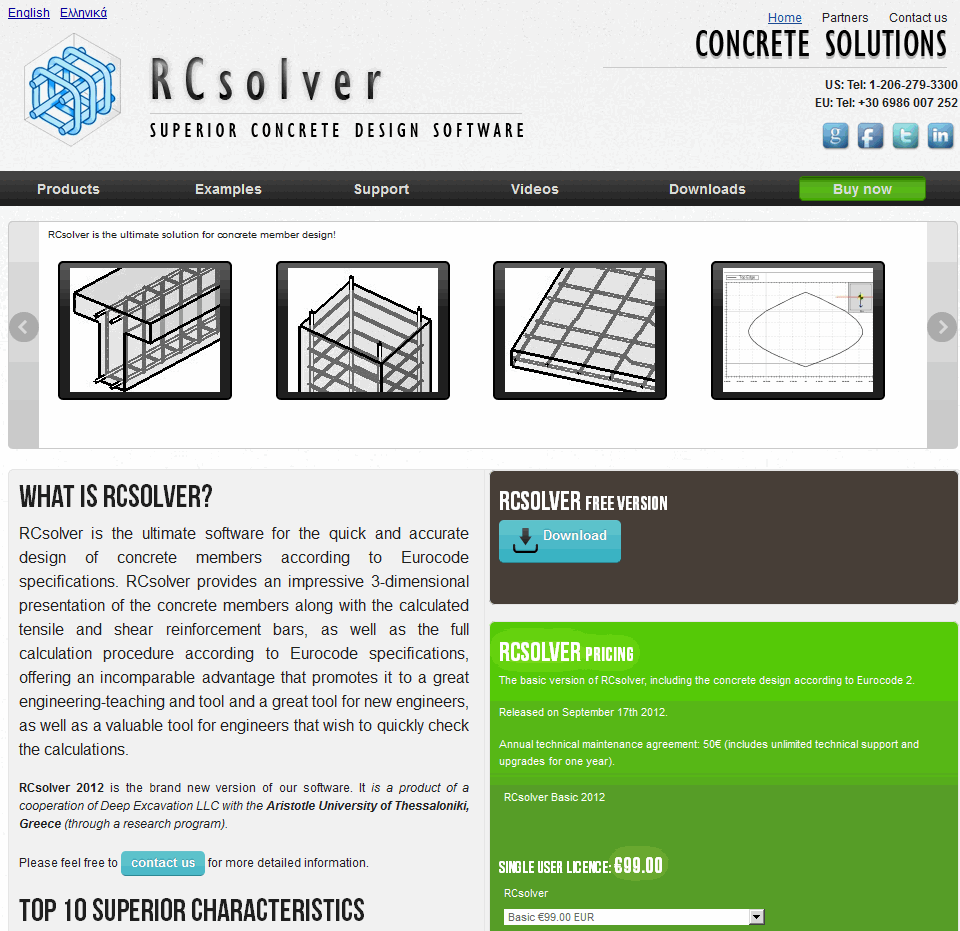
RCsolver is a software for
the quick and accurate design of concrete members according to Eurocode
specifications (primarily 2 and 8). RCsolver provides a 3-dimensional
presentation of the concrete members along with the calculated tensile
and shear reinforcement bars, as well as the full calculation procedure
according to Eurocode specifications, acting as a great engineering-teaching as well as a valuable tool for engineers that
wish to quickly check their calculations. RCSolver free version is available at the software website
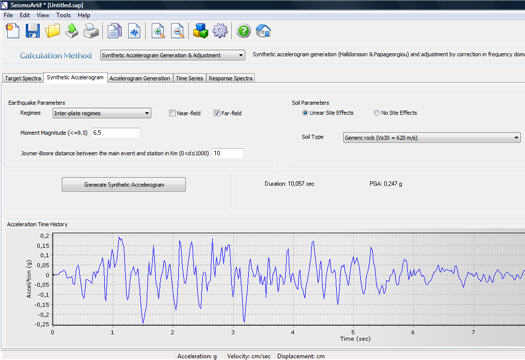
Seismosoft has announced the release of SeismoArtif, an application capable of generating artificial
earthquake accelerograms matched to a specific target response spectrum
using different calculation methods and varied assumptions. In other
words, the ideal companion tool of SeismoMatch, to be used in those cases where spectrum matching of real accelerograms is not pursuable.
In
tandem with this new release, Seismosoft has also published new versions of
SeismoSignal, SeismoSpect and SeismoMatch. In the News
section of the official website it is possible to get a glimpse of the novelties and
improvements introduced in these programs, which can all be downloaded
from here
.
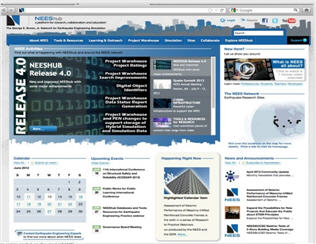
The NEEScomm IT Team announced Release 4.0, a major NEEShub
Release. Release enhancements are related to the Project Warehouse, Project Reviews, Data Status Report Generation, Digital Object Identifiers and Project Warehouse and Project Editor support for Simulation and Hybrid Simulation Experiments. They are described in detail in http://nees.org/announcements/neeshubrelease40
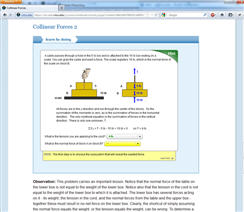
OLI Engineering Statics
is a freely available, on-line Statics course coauthored by Anna Dollár
and Paul Steif. The course is part of a suite of cognitively informed,
web-based introductory level undergraduate courses that were developed
at Carnegie Mellon University under the Open Learning Initiative.
The initial development of this course was supported by the William
and Flora Hewlett Foundation. Further development of the OLI Engineering
Statics course has been supported by the National Science Foundation
under grant DUE 0918271.
The OLI Engineering Statics course contains many interactive
elements, including: simulations, “walk-throughs” that integrate voice
and graphics to explain an example of the procedure or a difficult
concept, and, most prominently, computer tutors in which students
practice problem solving, with hints and feedback. The course is built
around a series of carefully devised learning objectives that are
independently assessable.While individual learners can and do use OLI Engineering Statics, it
is also increasingly used in Statics courses led by instructors. In
different settings it: replaces the textbook, acts as a supplement to
the textbook, or functions as the primary instruction in a
instructor-led, distance course. When a group of students enter OLI
Engineering Statics using an instructor-generated course key, then the
instructor has full access to those students’ activities in the course,
including graded quizzes, and can leverage that knowledge to improve
classroom instruction. Information about the Open Learning Initiative generally may be found here. The Open and Free version of the OLI Engineering Statics may be found here.
Information for instructors who are interested in setting up an
academic section of OLI Engineering Statics for their students and
blending OLI into their class may be found here.
Η εταιρία ανάπτυξης του λογισμικού SAP2000 ανακοίνωσε τη δημιουργία ενός περιβάλλοντος ελέγχου και προγραμματισμού του προγράμματος με τη χρήση Visual Basic for Applications (VBA)
Τέσσερα πρότυπα παραδείγματα διαστασιολόγησης σύμφωνα με τον ΕΚΟΣ2000 για τον έλεγχο του τεχνικού λογισμικού αλλά και τον αυτοέλεγχο των χρηστών εμπορικών προγραμμάτων πολιτικού μηχανικού είναι διαθέσιμα στον δικτυακό τόπο www.ekosdesignexamples.gr Στον αυτό δικτυακό τόπο είναι διαθέσιμη και η σχετική εργασία που παρουσιάστηκε στο πλαίσιο του 3ου Πανελληνίου Συνεδρίου Αντισεισμικής Μηχανικής.
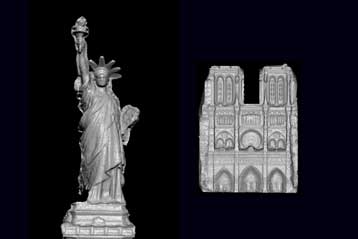
Το Αγαλμα της Ελευθερίας και η Παναγία των Παρισίων μοιάζουν να φτιάχτηκαν από πλαστελίνη
Σιάτλ
Ένα εργαλείο λογισμικού που τελειοποιείται στις ΗΠΑ μπορεί να δημιουργεί τρισδιάστατα εικονικά μνημεία κατεβάζοντας τουριστικές φωτογραφίες τους από δημοφιλείς υπηρεσίες στο Διαδίκτυο όπως το Flickr.com.
Συγκρίνοντας φωτογραφίες του ίδιου κτιρίου που τραβήχτηκαν από διαφορετικά σημεία, το πρόγραμμα υπολογίζει πού στεκόταν κάθε φωτογράφος και στη συνέχεια εφαρμόζει αρχές της μηχανικής όρασης για να καθορίσει την τρισδιάστατη γεωμετρία του μνημείου.
Μεταξύ των μοντέλων που παρουσίασαν οι ερευνητές του Πανεπιστημίου της Ουάσινγκτον στο Διεθνές Συνέδριο Μηχανικής Όρασης ήταν η Παναγία των Παρισίων και το Αγαλμα της Ελευθερίας στη Νέα Υόρκη.
Αν και οι φωτογραφίες που φιλοξενεί συνήθως το Flickr δεν είναι επαγγελματικής ποιότητας, ο Δρ Στιβ Σάιτζ και οι συνεργάτες του αποφάσισαν ότι θα μπορούσαν να αξιοποιηθούν ευκολότερα κυρίως λόγω του τεράστιου αριθμού τους -περίπου ένα δισεκατομμύριο φωτογραφίες από 10 εκατομμύρια χρήστες.
Η αναζήτηση με τις λέξεις-κλειδιά «Αγαλμα της Ελευθερίας» έδωσε 60.000 αποτελέσματα, από τα οποία ο υπολογιστής διάλεξε αυτόματα τις πιο καθαρές φωτογραφίες.
Στην περίπτωση της Βασιλικής του Αγίου Πέτρου στη Ρώμη, το πρόγραμμα χρειάστηκε δύο ώρες για να αναλύσει 151 φωτογραφίες και να δημιουργήσει το τρισδιάστατο μοντέλο. Η επιλογή των φωτογραφιών και όλοι οι υπολογισμοί έγιναν αυτόματα.
Η ποιότητα του τελικού μοντέλου εξαρτάται από την ανάλυση των φωτογραφιών και γενικά είναι χαμηλότερη απ’ ό,τι προσφέρουν οι επαγγελματικοί σαρωτές λέιζερ που χρησιμοποιούνται για μετρήσεις μεγάλων αντικειμένων με ακρίβεια.
Στο μέλλον, όμως, η ακρίβεια του νέου λογισμικού αναμένεται να βελτιωθεί. «Το μακροπρόθεσμο όραμά μας είναι να μπορούμε να αναδημιουργήσουμε τη λεπτομερή γεωμετρία όλων των κατασκευών στην επιφάνεια της Γης» δήλωσε στο EurekAlert.org ο Δρ Σάιτζ.
Οι έρευνές του χρηματοδοτούνται μεταξύ άλλων από τη Microsoft και την Adobe.