GEER field mission report on the Italian earthquake of 24/8/16
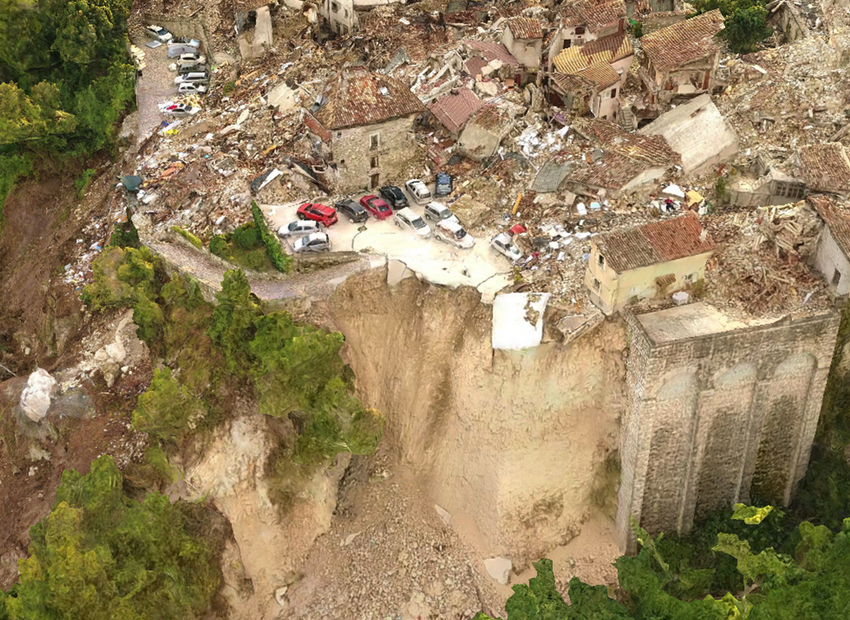
Version 2.0 of the GEER field mission report on the Italian earthquake
of 24/8/16. Mission led by Prof. Jonathan Stewart, UCLA. More info: http://tinyurl.com/gmf6v3a
Version 2.0 of the GEER field mission report on the Italian earthquake
of 24/8/16. Mission led by Prof. Jonathan Stewart, UCLA. More info: http://tinyurl.com/gmf6v3a
Simulation of a steel truss pedestrian bridge with ABAQUS/Simulia Finite Element Software
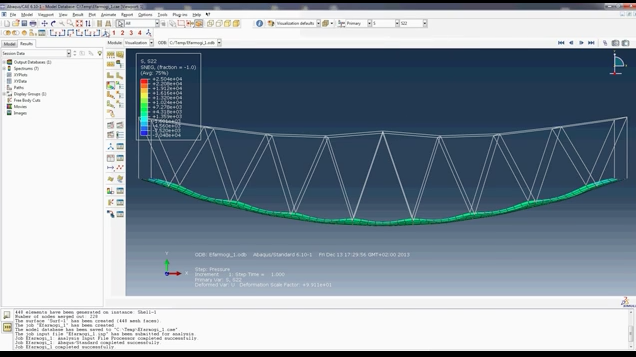
Video available here: https://youtu.be/EOONdIHUTf8
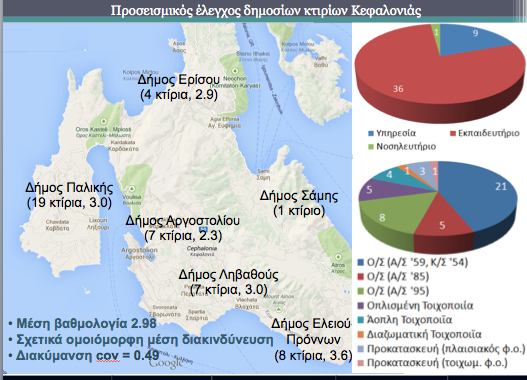
Presentation made during the Workshop about Cephalonia Earthquake jointly organised by the Society of Civil Engineers, the Hellenic Association for Earthquake Engineering, the Greek branch of the International Association for Bridge and Structural Engineering and the Organisation for Earthquake Protection and Planning.
Presentation available in YouTube:

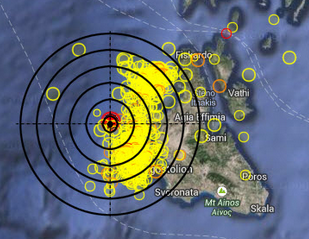
Constantly updated Web Info Point:
Event sequence
Recorded Ground motions
Response Spectra

Photos & Videos
Structural damage
Technical Reports
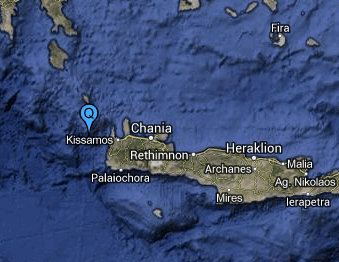
Date / Time, Oct 12 4:11 PM local time, Focal Depth: 50 km, GEO: Longitude 23.330, GEO: Latitude 35.530, 65km West of Chania
Magnitude Ms = 6.2
Source: EMSC EARTHQUAKE-REPORT.COM

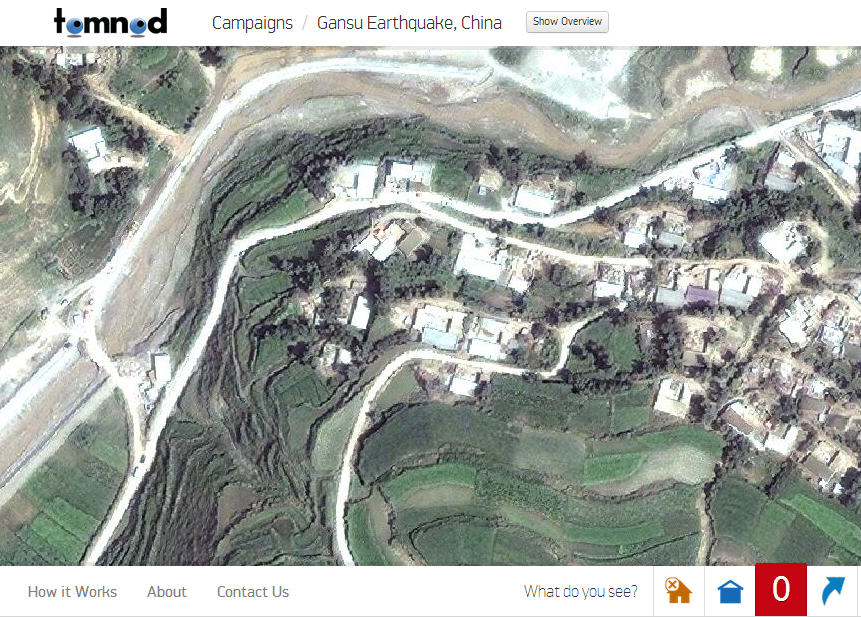
After the Christchurch earthquake, a new initiative has been undertaken to mobilize the engineering community to quickly trace damage visually based on high resolution Google Earth maps. This volunteer work helps the authorities identify quickly on the areas of highest earthquake impact and manage the recovery and reconnaissance activities. This time Tomnod, the web-based tool used for for this purpose has initiated a campaign to help identify the impact of the two powerful earthquakes that have struck China’s north-west Gansu province, killing at least 75 people and leaving more than 400 others injured.
In my opinion this initiative is quite premature so far while the subjectivity of the visualization by individual volunteers increases the uncertainty of the macroscopic assessment. However, the large number of the people involved may somehow smooth the assessment discrepancy and provide some basic trends regarding the areas most heavily hit, a fact that is of paramount importance particularly in extended remote areas such as the Chinese provinces. I think it is worth giving it a try by connecting to the digital images here. Even the idea of contributing to human relief from the comfort of your office or home is quite rewarding.

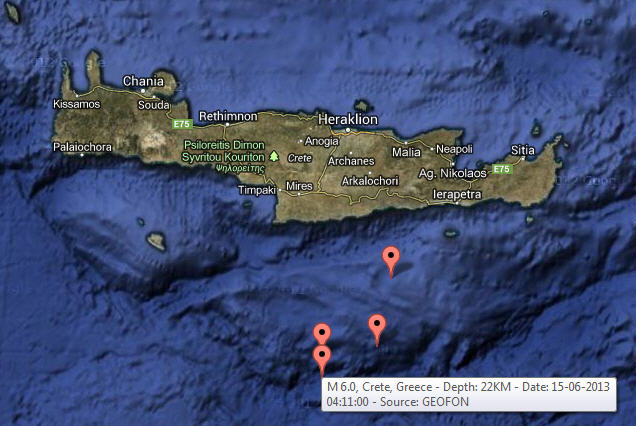
Magnitude 5.9 earthquake rattled Crete at 19:11pm local time. Epicenter was located 143km south of the city of Ierapetra. Focal depth estimate of 14km.
More: Institute of Geodynamics
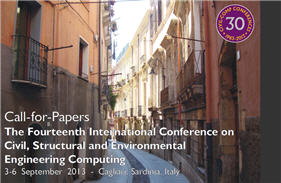 An “Earthquake Engineering” Special Session is organized within the framework of Fourteenth International Conference on Civil, Structural and Environmental Engineering Computing, to be held in Cagliari, Sardinia, Italy between 3-6 September 2013. It is organized by Anastasios Sextos, Assistant Professor at Aristotle University of Thessaloniki.
The Special Session focuses on recent advances in Computational Earthquake Engineering and Structural Dynamics. More specifically, it will encourage contributions related to the mitigation of seismic risk, the design and assessment of
earthquake resistant buildings and bridges, the assessment of
special and monumental structures, system identification and structural health
monitoring, performance-based engineering, seismic
isolation and control of structures, dynamic soil-structure
interaction, strong ground motion selection and scaling as well as
seismic wave propagation through the soil media. Papers related to new
software applications, web-based engineering tools, frameworks for
hybrid simulation and distributed computing, knowledge-based & expert
systems, finite
element programs, numerical analysis pre- and post- processing
front-ends, data and metadata dissemination and management
systems, high performance, parallel and cloud computing schemes,
applications for mobile devices and tablets as well as GIS-based
visualization tools are also welcome.
It is envisioned that the Special Session will constitute an interesting forum for scientists using state-of-the-art computational methods and tools for Earthquake Engineering purposes.
Please note that the call for papers closes on the 5th December 2012 and abstracts may be submitted via the conference website: http://www.civil-comp.com/conf/
To encourage young researchers to attend the conference a 1000 Euro Young Researcher Best Paper Prize will be awarded to the best paper presented at each of the conferences. (For further details please see the conference website).
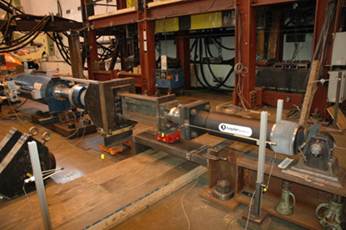
The
NEESR project entitled NEESR-CR: Performance-Based Design for
Cost-Effective Seismic Hazard Mitigation in New Buildings Using
Supplemental Passive Damper Systems (PI: Richard Sause) is currently
conducting a series of large-scale real-time hybrid simulations (RTHS)
on a 3-story steel frame building at the Real-time Multi-directional
(RTMD) Earthquake Simulation Facility, the Lehigh NEES Equipment Site.
The goal for this NEESR project is to develop
a validated, probabilistic, performance-based seismic design procedure
for buildings with passive damping systems.The
RTHS data will be used to observe and understand the interactions of
the viscous dampers with the braces, beams, and columns of the
experimental substructure as well as the interactions
between the steel frame with the dampers and the rest of the building.
The project team has developed detailed analytical (numerical
simulation) models of the prototype building with nonlinear viscous
dampers, and the RTHS data will be used to validate the
models. RTHS
will take place February 21 – 22, 2013 between 1 and 4 pm EST. The RTHS
test matrix includes conducting a series of simulations using an
ensemble of 13 earthquake records at the design
basis earthquake (DBE) level. The RTHS can be viewed by telepresence,
where webcams and the Real-Time Data Viewer can be used to view video,
data and animation of the response of the building acquired from the
RTHS. To learn more or to remotely participate,
go to the following link (http://www.nees.lehigh.edu/rths-of-mrf-dbf-system-with-viscous-dampers). Result (including video) from completed tests will also be archived and
available at the previous link and through the Project Warehouse on NEES.org. Also,
follow us on Facebook to get up to the minute simulation updates from our
research team.
The
project is a collaborative effort that includes California State
University, Northridge; California State Polytechnic University, Pomoma;
Lehigh University; The Pennsylvania State University,
Erie; and Tokyo Institute of Technology. Industry partners include
Corry Rubber Company, Taylor Devices, Miyamoto International, Inc. and
Simpson Gumpertz & Heger. More information about the above NEESR project can be found
here. You are encouraged to visit the
RTMD website to learn about the capabilities of the Lehigh NEES Equipment Site and completed and
ongoing research projects. Data can be accessed at NEEShub for the
completed projects.


