Earthquake Geo Survey is an application that can be used by earth-scientists and engineers during field surveys in order to report the earthquake-induced environmental effects. The app has been designed based on the EEE form, proposed by the INQUA TERPRO Focus Area on Paleoseismology and Active Tectonics, for reporting earthquake-induced deformations and processing the collected data at the end of a post-earthquake reconnaissance field survey. As an outcome, the earthquake environmental effects can be documented and the macroseismic intensity will be evaluated based on the Environmental Seismic Intensity-2007 (ESI-07) scale. The post-earthquake report can be exported as kmz file and consequently uploaded to GIS environment.
A special course is organised at Aristotle University of Thessaloniki (March 15-22, 2014), in the framework of the ATHENS Programme aiming to provide the theoretical and practical background required for engineering students in order to gain an improved understanding of the financial, managerial and technical difficulties related to the construction of a new Metro system and its overall consequences to the city sustainability.APPLY: http://www.athensprogramme.com/main
Minimum year of study
4th year
Minimum level of English
Good
Minimum level of French
None
Key words
Metro systems, sustainability, construction, building environment
C. Anagnostopoulos, A. Avdelas, T. Chatzigogos, N. Moussiopoulos, P. Papaioanou, K. Pitilakis,C. Pyrgidis, A. Sextos, K. Stylianidis, S. Tsotsos, A. Giannakou plus other non-academic experts
Number of places
Minimum: 10, Maximum: 30, Reserved for local students: 10
Objectives
To provide the theoretical and practical background required for engineering students in order to gain an improved understanding of the financial, managerial and technical difficulties related to the construction of a new Metro system and its overall consequences to the city sustainability.
Programme to be followed
4 morning lectures of 4 hours each and 4 evening lectures of 2 hours each plus 6 hours of site visit.
Topics of the lectures:
Overview of the Thessaloniki Metro Project
Social Impact of Thessaloniki Metro
Archaeological aspects
Urban railway systems – Basic characteristics of Metro systems – Metro systems in Greece
Thessaloniki Metro: contribution to the sustainability of the city agglomeration
Installation of mechanical equipment for operational purposes (to be confirmed)
Principles for the seismic design and vulnerability assessment of metro tunnels: The case of Thessaloniki metro line
Geotechnical problems related to tunneling and underground works
Innovative construction techniques of the Thessaloniki Metro
Environmental implications of the Metro construction (to be confirmed)
Soil-structure interaction aspects and Metro construction
Effects of Metro tunneling on the structural integrity of Thessaloniki monuments
‘Hand-on’ training on Finite Element modelling of the superstructure-soil-tunneling system using the computer code ANSYS (application at the Computer Lab. of the Department of Civil Engineering).
The Institute for Sustainability and Innovation in Civil Engineering (Guimaraes, Portugal) is looking for a postdoc researcher on the structural performance of Civil Engineering Works. The approach includes aspects such as advances in experimental and numerical techniques, earthquake engineering, durability and reliability, sustainability, strengthening, condition assessment and life cycle analysis.
– Identification of the candidate
– Detailed curriculum Vitae/resume
– 3 Letters of Reference sent directly by the individual providing the reference to sec-centros@civil.uminho.pt
– 1 Research project proposal for the period of the contract
The Hellenic Group of IABSE, with the support of the Hellenic Association of Civil Engineers, is pleased to organize a special session on “New trends and developments in Structural Engineering”.
Speakers:
Giorgio Macchi, Professor, University of Pavia
Michel Virlogeux, Ecole Nationale Des Ponts et Chaussées
Michael Fardis, Professor, University of Patras
George Gazetas, Professor, National Technical University of Athens
Date: Tuesday, January 14th, 2014
Venue: Auditorium of the Ministry of Infrastructure, Transport and Networks, Ground Floor,
At the end of the lectures, Prof. Theodosios Tassios will be receive by the Prof. Michel VIRLOGEUX, “The International Award of Merit in Structural Engineering” for his prominent personality, his significant contribution in Structural Engineering, and his wide social activity.
Applications for the Advanced Masters in Structural Analysis of Monuments and Historical Constructions, approved and financially sponsored by the European Commission within the framework of the Erasmus Mundus Programme, are opened up to January 20, 2014.
This Master Course is organized by a Consortium of leading European Universities/Research Institutions in the field, composed by University of Minho (coordinating institution, Portugal), theTechnical University of Catalonia (Spain), the Czech Technical University in Prague (Czech Republic), the University of Padua (Italy) and the Institute of Theoretical and Applied Mechanics of the Czech Academy of Sciences (Czech Republic). The course combines the most recent advances in research and development with practical applications.
A significant number of scholarships, ranging from 4000 to 24000 Euro, are available to students of any nationality.
The Consortium is also available to provide Erasmus Mundus International Fellowships to outstanding non-European scholars for teaching and research activities for a period of up to three months.
The European Center of Prevention and Forecasting of Earthquakes(ECPFE) and the Earthquake Planning and Protection Organization (EPPO) of Greece took the initiative to organize in the framework of the EUR-OPA agreement a Workshop-Seminar on the above subject. The Workshop-Seminar will take place in Athens, 2 December 2013. A field trip will take place on 3 December 2013. The thematic topics of the Workshop-Seminar are :
1.Classification of importance of Monuments and acceptable damage levels 2.Basic data influencing the design (Architectural , historical and Structural documentation, Monitoring of seismic behaviour, etc 3.Methods of Analysis for Assessment of bearing capacity and the design of Structural Interventions, 4.Estimation of Resistances of critical regions before and after Interventions, 5.Selection of Design Seismic Actions for the redesign, 6.Criteria for the selection of the most appropriate scheme of Structural Interventions: Monumentic values/optimum interventions 7.Case studies 8.Existing National Regulatory documents for the aseismic design of structural interventions in Monuments
Please note that the official language of the Workshop-Seminar is in English.
A special issue of the Hellenic Association for Earthquake Engineering related to the Seismic Design of major projects along the Egnatia Highway is now made available online
Title: Aseismic Design and Construction along the Egnatia Odos
Editor: A.J. Kappos
Size: 51MB
Type: PDF
Official Website of the Hellenic Association for Earthquake Engineering: www.eltam.gr
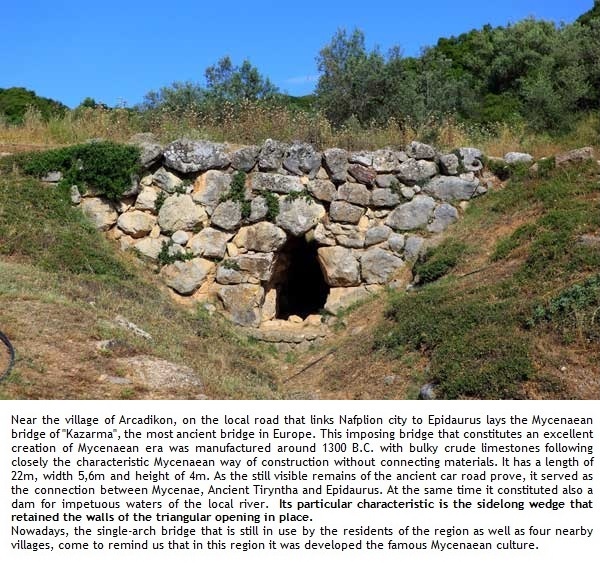
The Hellenic Society of Bridges Study is pleased to announce the second IBSBI Conference, “Innovations On Bridges And Soil-Bridge Interaction” IBSBI 2014, which will be held in Athens on 16, 17 and 18 October 2014. During 2014 we will be celebrating the 3300 years of the construction of the oldest bridge in Europe, the Mycenaean Bridge of Kazarma.
CONFERENCE TOPICS
· Aesthetics and architecture of bridges
· Bridge monitoring
· Design methods
· Fabrication and construction
· High performance materials
· New materials and their application on bridges
· International codes on bridges and comparison-loadings
· Seismic behaviour
· Vehicle-bridge interaction
· Old bridges and maintenance
· Stone bridges
· Long-span bridges
· Special forms of bridges
· Floating bridges
· Pedestrian bridges
· Sky-bridges
· Geotechnical problems
· Soil-structure interaction
· Stability problems – types and analysis
· Auxiliary and connected sub-structures
· Prefabrication
· Erection
· Computational techniques
· Experimental research
· Isolation and damping systems
· Aeroelasticity
Impact and explosion problems
· Multi-hazard loading on bridges
CALL FOR ABSTRACTS
The Scientific Committee invites all participants wishing to contribute to the scientific program to submit an abstract for oral presentation. Abstracts must be submitted by the deadline, January 10, 2014, to the following e-mail address:ibsbi2014@ntua.gr . Abstracts received after this date will not be considered.
Selected papers of high quality will be considered for publication in an extended form in the new International Journal IJBE after invitation ( http://www.ijbe.net/ ).
Excellent report by the Joint Research Center on various aspects of Eurocode 8 application inclussive of illustrative worked examples. Download
A complete list of Eurocode-related publications and presentations can be found here
The new EERI database is an excellent and very educational colllection of seismically induced damage of reinforced concrete buildings. It contains over 50 case studies on concrete buildings damaged in over 20 earthquakes. Each case study provides detailed information about the building and photographs of damage. The information presented has been extracted from references and discussions with mentors. The database is presented as a baseline for further research and should not be construed as definitive analysis. Images in the database are taken from references, online reports, EERI photo collections, and individual mentors. For more information about this database, visit http://db.concretecoalition.org/
Civil Engineering Toolbox is a revolutionary way to perform simple and some not-so-simple, structural engineering calculations using iPad. It is not about solving complex math but rather about understanding and conceptually decoupling the fundamental steps of structural engineering: (a) define the structural system, (b) define the loading patterns acting on the structure, (c) select material properties from a database, (d) select sections from a database, (e) check the developed stresses, the displacements and the associated cost. If acceptable, that’s fine; if not, the user needs to think carefully which one of (a)-(d) need to be modified to get the optimum balance between safety factor and cost. In case it is needed, a photo can be captured on site and the entire calculation package can be sent to the office computer by e-mail together with the exact GPS location of the site.
With Civil Engineering Toolbox, the engineer can perform the following tasks:
-Design a reinforced concrete beam in flexure [required reinforcement and associated cost]
-Solve a simply supported slab [for various supports and loads, according to Czerny method]
-Solve a straight, simply supported beam [for various supports and loads]
-Solve a one bay frame [for various supports and loads]
-Solve a continuous beam and plot deflections, bending moments and shear forces [for various number of spans, supports and uniform/non-uniform loads]
-Manage the Material Properties Library [reinforced concrete and steel materials]
-Manage the Structural Section Library [Rectangular R/C sections & IPE, HEA, HEB, IPN steel sections]
-Report generation and e-mail export (inclusive of results, photo and GPS location]
Date / Time, Oct 12 4:11 PM local time, Focal Depth: 50 km, GEO: Longitude 23.330, GEO: Latitude 35.530, 65km West of Chania
Magnitude Ms = 6.2
Source: EMSC EARTHQUAKE-REPORT.COM
A 2013 revision of the Hellenic Code for Seismic Interventions (i.e., the Greek equivalent to Eurocode 8 – Part 3 for retrofitting of structures) has been officiallt published in the Government Gazette (Φ.Ε.Κ.). The revised version of the code is available through the website of the Earthquake Planning and Protection Organisation (O.A.S.P.)
The primary objective of the NEES@Illinois facility is to create a physical-analytical simulation environment whereby multi-axial, full-scale structure-foundation-soil systems can be subjected to complex loading and boundary conditions representing earthquake ground motion. Actions and responses are captured by state-of-the-art instrumentation and are processed and visualized using software developed by the site.
The major physical components of the facility are the reaction structure and the loading and boundary condition boxes, or LBCBs. Each LBCB is a self-reacting assembly of actuators, swivel joints, and control software capable of imposing any combination of six actions (forces and moments) and six deformations (displacements and rotations) on specimens connected to the loading platforms of the LBCBs. The site has three (3) large LBCBs, which can be used separately or in combination. When used together the LBCBs can be controlled independently, or they can be controlled to act as a single LBCB with increased load capacity. One of the key attributes of the MUST-SIM facility is that the LBCBs may be reconfigured to accommodate a vast array of testing needs. Examples of past tests and specifications of the test equipment will be presented during the webinar.
In addition to the full-scale facility, the NEES@Illinois site has a fully-operational, 1/5th-scale version of the MUST-SIM laboratory. This facility provides a realistic pre-test environment and serves as an education and outreach facility, but has also proven to be a worthy research facility in its own right.
Beyond the hardware aspects of the laboratory, NEES@Illinois has also developed the control systems and data acquisition systems used in the MUST-SIM. These systems will be covered in detail.
Hybrid simulation offers the most realistic testing to mimic actual system responses and NEES@Illinois is at the forefront of this area of research. 3-D hybrid simulation using UI-SimCor, a simulation coordinator developed at NEES@Illinois, will also be discussed.
Sextos, A.G. (2013) “A Paperless Course on Structural Engineering Programming: investing in educational technology in the times of the Greek financial recession”, European Journal of Engineering Education.
This paper presents the structure of an undergraduate course entitled ‘programming techniques and the use of specialised software in structural engineering’ which is offered to the fifth (final) year students of the Civil Engineering Department of Aristotle University Thessaloniki in Greece. The aim of this course is to demonstrate the use of new information technologies in the field of structural engineering and to teach modern programming and finite element simulation techniques that the students can in turn apply in both research and everyday design of structures. The course also focuses on the physical interpretation of structural engineering problems, in a way that the students become familiar with the concept of computational tools without losing perspective from the engineering problem studied. For this purpose, a wide variety of structural engineering problems are studied in class, involving structural statics, dynamics, earthquake engineering, design of reinforced concrete and steel structures as well as data and information management. The main novelty of the course is that it is taught and examined solely in the computer laboratory ensuring that each student can accomplish the prescribed ‘hands-on’ training on a dedicated computer, strictly on a 1:1 student over hardware ratio. Significant effort has also been put so that modern educational techniques and tools are utilised to offer the course in an essentially paperless mode. This involves electronic educational material, video tutorials, student information in real time and exams given and assessed electronically through an ad hoc developed, personalised, electronic system. The positive feedback received from the students reveals that the concept of a paperless course is not only applicable in real academic conditions but is also a promising approach that significantly increases student productivity and engagement. The question, however, is whether such an investment in educational technology is indeed timely during economic recession, where the academic priorities are rapidly changing. In the light of this unfavourable and unstable financial environment, a critical overview of the strengths, the weaknesses, the opportunities and the threats of this effort is presented herein, hopefully contributing to the discussion on the future of higher education in the time of crisis.
More at the Journal Website
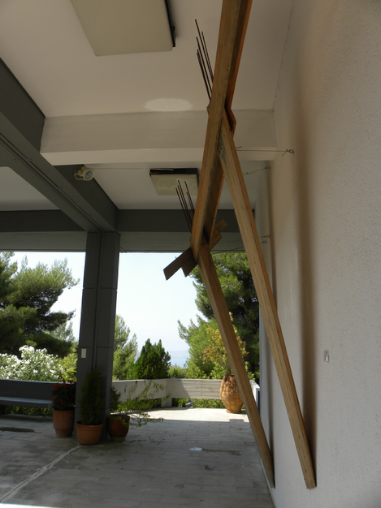
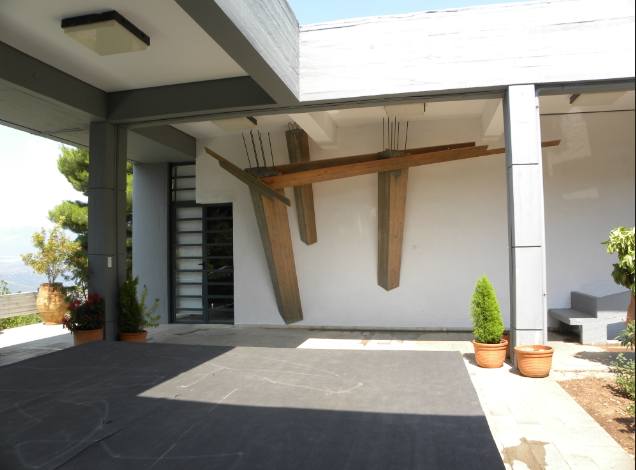
Literally. This is not about another scientific paper but about a piece of magnificent art at the European Cultural Center of Delphi, Greece. Surprising how different a humble theme like a reinforced concrete casting may look from a number of different perspectives. Artist is K. Tsoklis.
After the Christchurch earthquake, a new initiative has been undertaken to mobilize the engineering community to quickly trace damage visually based on high resolution Google Earth maps. This volunteer work helps the authorities identify quickly on the areas of highest earthquake impact and manage the recovery and reconnaissance activities. This time Tomnod, the web-based tool used for for this purpose has initiated a campaign to help identify the impact of the two powerful earthquakes that have struck China’s north-west Gansu province, killing at least 75 people and leaving more than 400 others injured.
In my opinion this initiative is quite premature so far while the subjectivity of the visualization by individual volunteers increases the uncertainty of the macroscopic assessment. However, the large number of the people involved may somehow smooth the assessment discrepancy and provide some basic trends regarding the areas most heavily hit, a fact that is of paramount importance particularly in extended remote areas such as the Chinese provinces. I think it is worth giving it a try by connecting to the digital images here. Even the idea of contributing to human relief from the comfort of your office or home is quite rewarding.
Applications are invited for one (1) post-doctoral researcher position at the Department of Civil and Environmental (HKUST) under the supervision of Dr. Elias Dimitrakopoulos. The research will be focused on the investigation of the Seismic Behaviour of Rocking Bridge Systems and will involve collaboration with researchers at Cambridge University in UK. The primary role of the post-doctoral researcher will be a fundamental investigation of rocking bridge systems through analytical modelling. Preference will be given to candidates with expertise in (one or preferably more of the following fields): analytical dynamics, earthquake engineering, nonlinear dynamics and control of dynamical systems. For further information, please send an informal enquiry to ilias@ust.hk (Dr. DIMITRAKOPOULOS).
The work place
The Civil and Environmental Engineering Department at the HKUST is young and dynamic, and is one of the most creative and most innovative, Civil Engineering Departments in universities in the region. Our faculty and facilities are recognized internationally and rank among the very best in the world. In addition, our School of Engineering has been consistently ranked among top 20 in the world according to the Times Higher Education Supplement.
Eligibility
The successful candidate will have a PhD in Civil Engineering, Mechanical Engineering, or a related field, and a proven track record of successful research. English Requirements: fluency in English is an indispensable requirement
Funding
The salary will be at least HK$20,000 per month, depending on experience and qualifications.
Employment
Form of employment: Time-limited
Work time: Full time
Starting date: 1 Oct 2013 (the latest)
How to apply
Applications should consist of a letter of application explaining your reasons for applying for the position, a detailed CV (including published or accepted for publication papers), together with the names and contact details of two academic referees who can be contacted prior to interview. The aforementioned documents (all in pdf format) should be sent by email to ilias@ust.hk (Dr. Dimitrakopoulos).
Application deadline: 16 August 2013
Interviews will be held with selected candidates as soon as possible after the application deadline