Special lecture presented at the Thirteenth International Conference on
Civil, Structural and Environmental Engineering Computing
18th European Conference on Earthquake Engineering (ECEE 2026)
The 18th European Conference on Earthquake Engineering (ECEE 2026) will take place in Berlin from 14–18 September 2026, bringing together researchers, engineers and practitioners from around the world. The conference will provide an important forum for sharing cutting-edge research, innovative technologies and practical solutions aimed at improving the seismic safety and resilience of our communities and infrastructure.
#ECEE2026 #EarthquakeEngineering #SeismicResilience #StructuralEngineering #Berlin

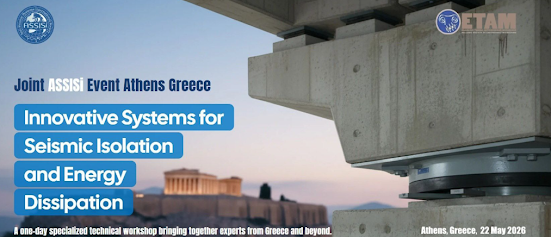
Οι πλέον προηγμένες τεχνολογίες σεισμικής θωράκισης παρουσιάζονται την Παρασκευή 22 Μαΐου, στο Ίδρυμα Ευγενίδου, Αθήνα. Η επιστημονική ημερίδα “Innovative Systems for Seismic Isolation and Energy Dissipation”, διοργανώνεται από τη Διεθνή Εταιρεία Αντισεισμικών Συστημάτων (ASSISi) σε συνεργασία με το Ελληνικό Τμήμα Αντισεισμικής Μηχανικής (ΕΤΑΜ). Διακεκριμένοι επιστήμονες και μελετητές, από ΗΠΑ, Ιαπωνία, Ιταλία, Τουρκία και Ελλάδα, θα δείξουν τις δυνατότητες των νέων τεχνολογιών σεισμικής μόνωσης και απόσβεσης ενέργειας και τον τρόπο με τον οποίο αυτές διασφαλίζουν την απρόσκοπτη λειτουργία κρίσιμων υποδομών, ακόμη και μετά από ισχυρές σεισμικές δονήσεις. Αναλυτικό πρόγραμμα και εγγραφές: http://assisi-athens.net
new MSc in Earthquake Engineering and Infrastructure Resilience
New
MSc Programme in Earthquake Engineering and Infrastructure Resilience
at the University of Bristol to start in September 2017.
For more information please refer to: http://www.bris.ac.uk/engineering/departments/civilengineering/courses/postgraduate/msc-earthquake-engineering/
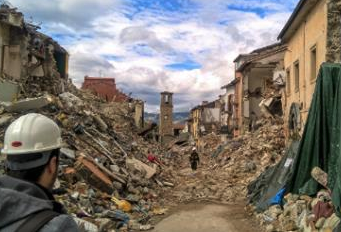
GEER Reconnaissance Report on the 24/8/2016 Central Italy (“Amatrice”) Earthquake (ver 1.0)
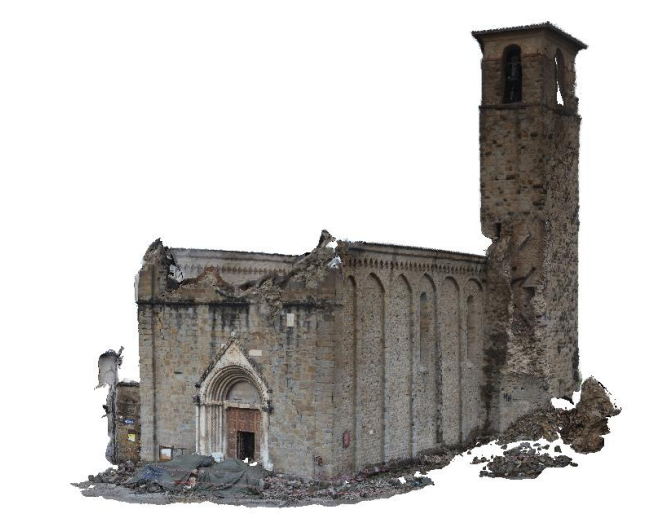
Preliminary reconnaissance report on the recent Italian earthquake posted on the GEER website (http://www.geerassociation.
Download
Special Session on “Performance-based soil-structure interaction of lifelines and infrastructure” in the framework of ICONHIC2016
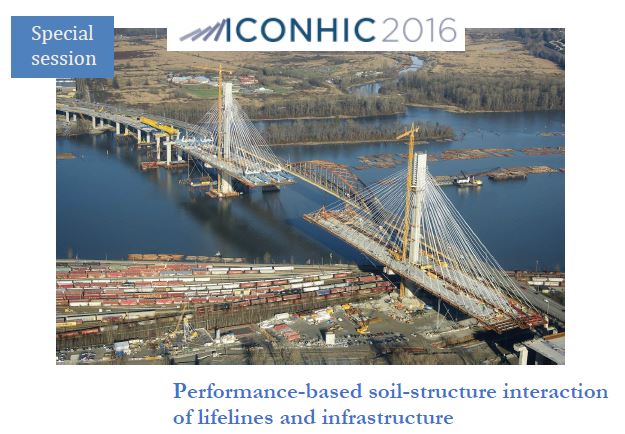
A special session on “Performance-based
Soil-Structure Interaction of
lifelines and infrastructure” is organised
during the International Conferenceon Natural Hazards and Infrastructure to be held in Chania, Greece, 28-30
June 2016. The Special Session
focuses on recent advances in
Performance-based Earthquake
Engineering with emphasis on
dynamically interacting soil-structure
systems, such as buildings, bridges,
geotechnical structures, wastewater,
sewage and energy pipelines, port
facilities as well as on related
infrastructure.
More specifically, it will encourage
contributions on the analysis, design
and assessment of coupled SSI
systems, probabilistic evaluation and mitigation of seismic risk, fragility
estimates at a component, structure
and network level, structural health
monitoring and innovative techniques
for identifying the dynamic
characteristics of flexibly supported
structures, new materials and
techniques for active, passive or
natural (in-soil) isolation and for
improving infrastructure resilience,
analytical, numerical and experimental
identification of dynamic SSI effects
as well as optimum earthquake ground
motion selection and generation for
research and design purposes.
It is envisaged that the Special Session
will constitute an interesting forum for
researchers and practitioners at the
boundaries between geotechnical and
structural engineering.
Organisers: Nicos Gerolymos & Anastasios Sextos
Seismic Risk of Highway Networks: freeware for Loss Assessment
A Matlab– & NEXTA-based freeware for assessing the Seismic Risk of Highway Networks simultaneously considering seismic hazard, structural vulnerability, geotechnical vulnerability, traffic flow and retrofit cost aiming to estimate the direct and indirect loss of the transportation network after multiple seismic scenarios.
More: www.retis-risk.eu
“Cities, Earthquakes, and Time” EERI Distinguished Lecture
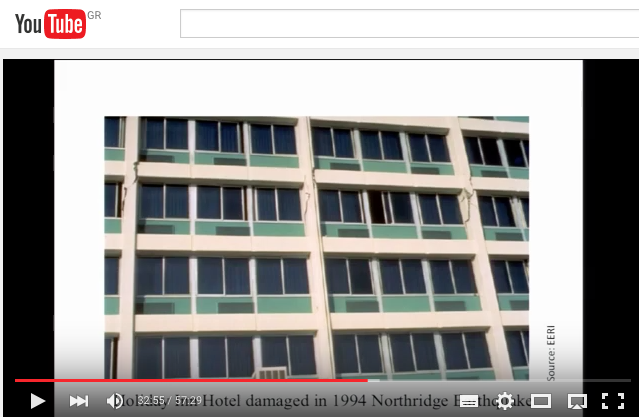
Dr. Robert Olshansky, Professor and Head at the Department of Urban and Regional Planning, University of Illinois at Urbana-Champaign, has been selected as EERI’s 2015 Distinguished Lecturer. Dr. Olshanksy’s lecture, titled “Cities, Earthquakes, and Time”, examines the relationships of earthquakes to time and the policy implications thereof. The EERI Distinguished Lecture Award is given to members of the EERI Institute to recognize and encourage communication of outstanding professional contributions of major importance for earthquake hazard mitigation.
International Conference on Natural Hazards & Infrastructure ICONHIC 2016
The International Conference on Natural Hazards & Infrastructure ICONHIC 2016, will be held on June 28-30, 2016 at the island of Crete, Greece.The purpose of ICONHIC 2016 is to bring together specialists from the academia and industry on earthquake engineering, landslides, floods, tsunamis and hurricanes. This conference offers us all the opportunity not only to state our case in
our own specialty but also to watch and listen how our “scientific
neighbors” are coping with in their fields of expertise. More
information can be found at:
our own specialty but also to watch and listen how our “scientific
neighbors” are coping with in their fields of expertise. More
information can be found at:
EERI reaction to the M8.3 earthquake
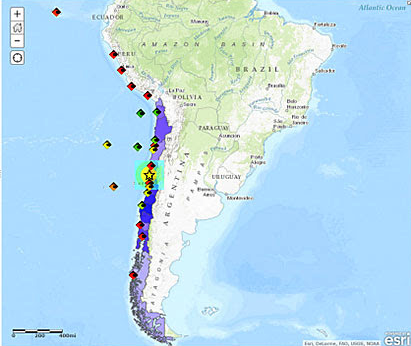
As part of its Learning from Earthquakes Program (LFE), EERI is responding to the M8.3 earthquake that struck 46 km west of Illapel, Chile on September 16, 2015. According to initial reports from EERI members in the country, the earthquake shaking and subsequent tsunami alert led to the safe evacuation of more than one million people along the coastline.
On Monday, September 21, EERI’s LFE Executive Committee met to discuss and plan a response to the Chile earthquake. Based on information available, the committee decided on the following actions:
1. Launch a virtual clearinghouse website to document earthquake impacts and easily share observations with EERI members and other colleagues. The clearinghouse site is now live at http://www.eqclearinghouse.org/2015-09-16-chile/
2. Solicit volunteers (especially students and young professionals in Chile) to participate as clearinghouse curators. These curators will collect information from media sources and expert field teams on particular topic areas or preliminary research areas, then synthesize the results into curated summaries. These summaries can help not only in reporting on topics areas, but may be helpful in identifying new areas of potential research. For this earthquake, clearinghouse curators are expected to create 1–3 posts on their selected topic within approximately one month of the event, depending on the amount of information available and relevant insights to share with the EERI membership. More information is shown at http://www.eqclearinghouse.org/2015-09-16-chile/curated-topics/
3. Coordinate and collaborate with Chilean colleagues for observations from the field, and encourage them to submit reports and data. To support submission of field photos and observations, EERI has launched a custom data map similar to the one used after the 2015 Nepal earthquake. EERI’s reconnaissance tools offer a seamless way for colleagues to submit geolocated photos to the map either from the field or upon their return. The map currently shows several public data layers to inform field team response.
4. Coordinate with any other international reconnaissance teams headed to the region for observations from the field, and encourage them to submit reports and data.