Strong earthquake, M=6.3 in northern Aegean, Greece
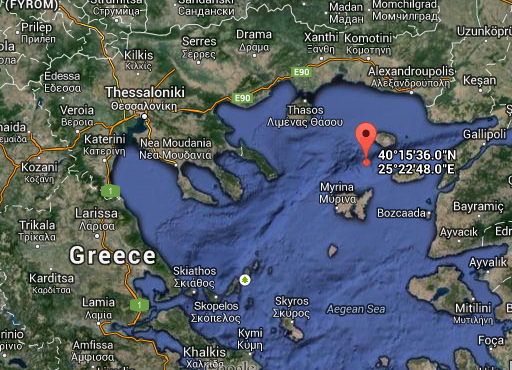
Earthquake was felt in Greece, Bulgaria and Turkey.
Magnitude: Ms=6.5
Depth: 5km
More at:
Earthquake Report
Earthquake was felt in Greece, Bulgaria and Turkey.
Magnitude: Ms=6.5
Depth: 5km
More at:
Earthquake Report
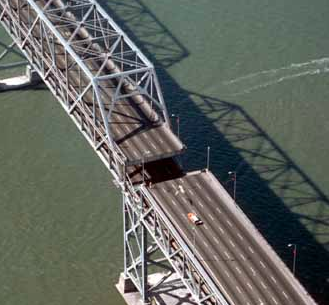
Two special sessions on on Computational Earthquake Engineering and Bridge Engineering, are organised during the Twelfth International Conference on Computational Structures Technology to be held in Naples, Italy, 2-5 September 2014. The conference runs concurrently with the Ninth International Conference on Engineering Computational Technology. Participants may attend sessions from either conference. More information on how to submit an abstract can be found here.
CST2014-S01: Computational Earthquake Engineering
The Special Session focuses on recent advances in Computational Earthquake Engineering and Structural Dynamics. More specifically, it will encourage contributions related to the mitigation of seismic risk, the design and assessment of earthquake resistant buildings and bridges, the assessment of special and monumental structures, system identification andstructural health monitoring, performance-based engineering, seismic isolation and control of structures, dynamic soil-structure interaction, strong ground motion selection and scaling as well as seismic wave propagation through the soil media. Papers related to new software applications, web-based engineering tools, frameworks for hybrid simulation and distributed computing, knowledge-based & expert systems, finite element programs, numerical analysis pre- and post- processing front-ends, data and metadata dissemination and management systems, high performance, parallel and cloud computing schemes, applications for mobile devices and tablets as well as GIS-based visualization tools are also welcome. It is envisioned that the Special Session will constitute an interesting forum for scientists using state-of-the-art computational methods and tools for Earthquake Engineering purposes.
CST2014-S03: Bridge Engineering: Modelling, Analysis and Design
The Special Session focuses on recent advances in Bridge Engineering and particularly with numerical methods for their analysis and design. More specifically, it will encourage contributions related to recent advances in Information & Communication Technologies (ICTs) and their applications in the design and assessment of bridges. It aims to review and critically demonstrate advanced numerical analysis methods, new software applications, web-based engineering tools, decision-making systems, collaborative on-site and remote research tools, frameworks for hybrid simulation (coupled experimental and numerical modules), open source finite element programs and collaborative frameworks for seismic applications, data and metadata dissemination and archiving, applications for mobile devices and remote computing, wireless data transmission and structural health monitoring, as well as earthquake- specific GIS applications. Code implications and case studies are also most welcome.
Deadline for submission of abstracts: February 15th, 2014.
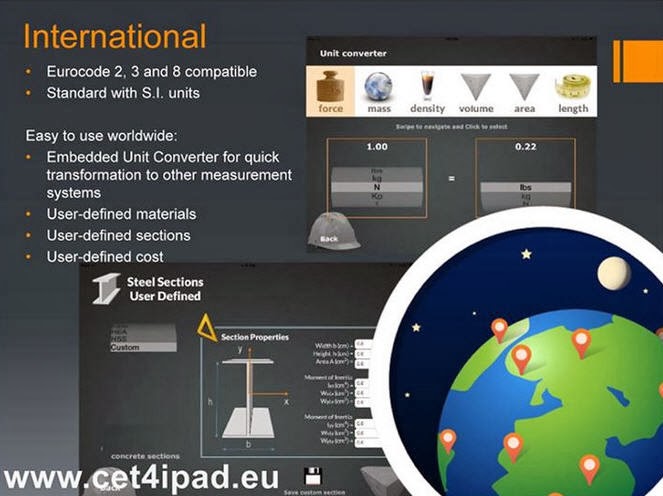
Civil Engineering Toolbox for iPad goes International: supporting user-defined materials and user-defined sections plus a new, multi-purpose unit converter. More at www.cet4ipad.eu
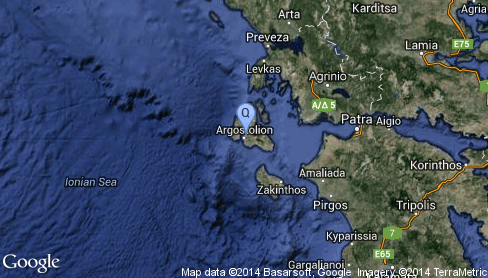
5.7 magnitude earthquake rattled Kefalonia island, Greece.
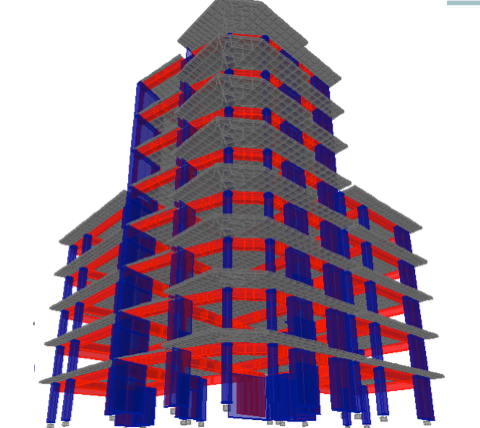
Presentation of an invited lecture at the University of Cyprus, November 16th, 2013.
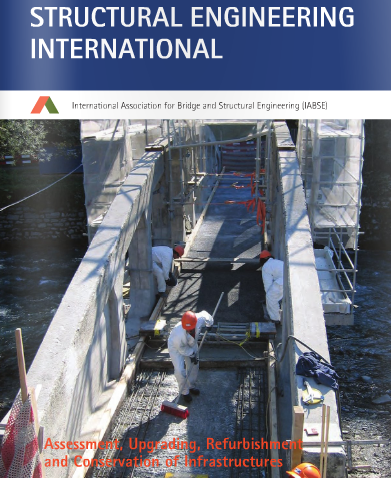
Access the latest issue of Structural Engineering International, the Journal of the International Association for Bridge and Structural Engineering (I.A.B.S.E.).
http://issuu.com/iabse.secretariat/docs/sei_4_2013_b2bfea685bc29e/1?e=0
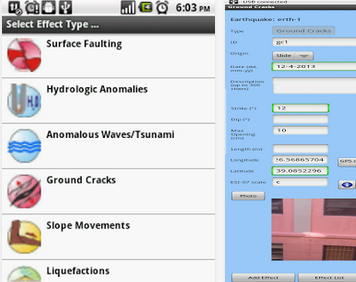
Earthquake Geo Survey is an application that can be used by earth-scientists and engineers during field surveys in order to report the earthquake-induced environmental effects. The app has been designed based on the EEE form, proposed by the INQUA TERPRO Focus Area on Paleoseismology and Active Tectonics, for reporting earthquake-induced deformations and processing the collected data at the end of a post-earthquake reconnaissance field survey. As an outcome, the earthquake environmental effects can be documented and the macroseismic intensity will be evaluated based on the Environmental Seismic Intensity-2007 (ESI-07) scale. The post-earthquake report can be exported as kmz file and consequently uploaded to GIS environment.
Features
• Surface ruptures
• Slope failures
• Liquefaction
• Tsunamis
• Hudrologic anomalies
• Ground cracks
• …other environmental effects
Available at Google Play: https://play.google.com/store/apps/details?id=org.inquaterpro.seismicsurveyapp
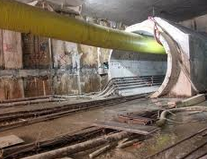
A special course is organised at Aristotle University of Thessaloniki (March 15-22, 2014), in the framework of the ATHENS Programme aiming to provide the theoretical and practical background required for engineering students in order to gain an improved understanding of the financial, managerial and technical difficulties related to the construction of a new Metro system and its overall consequences to the city sustainability.APPLY: http://www.athensprogramme.com/main
Minimum year of study |
4th year |
| Minimum level of English | Good |
| Minimum level of French | None |
| Key words | Metro systems, sustainability, construction, building environment |
| Language | English |
| Professor responsible | Aris Avdelas |
| Telephone | + 30 2310 995784 |
| Fax | + 30 2310 995642 |
| avdelas@civil.auth.gr | |
| Participating professors | C. Anagnostopoulos, A. Avdelas, T. Chatzigogos, N. Moussiopoulos, P. Papaioanou, K. Pitilakis,C. Pyrgidis, A. Sextos, K. Stylianidis, S. Tsotsos, A. Giannakou plus other non-academic experts |
| Number of places | Minimum: 10, Maximum: 30, Reserved for local students: 10 |
| Objectives | To provide the theoretical and practical background required for engineering students in order to gain an improved understanding of the financial, managerial and technical difficulties related to the construction of a new Metro system and its overall consequences to the city sustainability. |
| Programme to be followed |
4 morning lectures of 4 hours each and 4 evening lectures of 2 hours each plus 6 hours of site visit.
Topics of the lectures:
|
The Institute for Sustainability and Innovation in Civil Engineering (Guimaraes, Portugal) is looking for a postdoc researcher on the structural performance of Civil Engineering Works. The approach includes aspects such as advances in experimental and numerical techniques, earthquake engineering, durability and reliability, sustainability, strengthening, condition assessment and life cycle analysis.
Full details are available at http://www.eracareers.pt/opportunities/index.aspx?task=global&jobId=41177. Candidates should have a high quality research record and preferably 3 years of post-doctoral research experience.
HOW TO APPLY
By email to sec-centros@civil.uminho.pt with the following information:
– Identification of the candidate
– Detailed curriculum Vitae/resume
– 3 Letters of Reference sent directly by the individual providing the reference to sec-centros@civil.uminho.pt
– 1 Research project proposal for the period of the contract
APPLICATION DEADLINE
January 27, 2014
The Hellenic Group of IABSE, with the support of the Hellenic Association of Civil Engineers, is pleased to organize a special session on “New trends and developments in Structural Engineering”.
Speakers:
Giorgio Macchi, Professor, University of Pavia
Michel Virlogeux, Ecole Nationale Des Ponts et Chaussées
Michael Fardis, Professor, University of Patras
George Gazetas, Professor, National Technical University of Athens
Date: Tuesday, January 14th, 2014
Venue: Auditorium of the Ministry of Infrastructure, Transport and Networks, Ground Floor,
At the end of the lectures, Prof. Theodosios Tassios will be receive by the Prof. Michel VIRLOGEUX, “The International Award of Merit in Structural Engineering” for his prominent personality, his significant contribution in Structural Engineering, and his wide social activity.