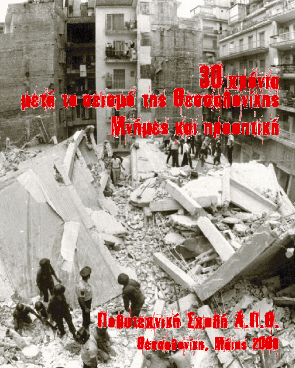
Επετειακή έκδοση για τα 30 χρόνια από το σεισμό της Θεσσαλονίκης
Εξαιρετική έκδοση-αφιέρωμα με την ευκαιρία της συμπλήρωσης 30 ετών από το σεισμό της Θεσσαλονίκης του 1978 βρίσκεται διαθέσιμη στο δικτυακό τόπο της Πολυτεχνικής Σχολής Α.Π.Θ.
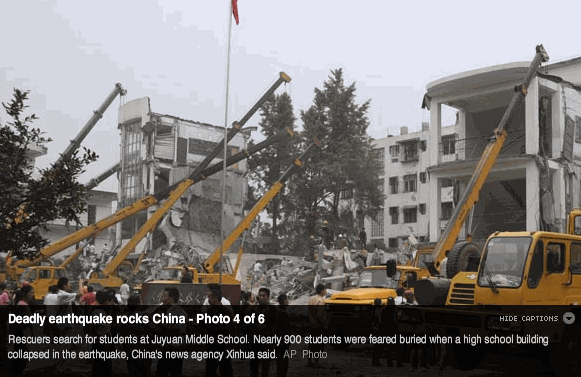
Ακολουθεί Ερασιτεχνικό Βίντεο


 2310-457902
 , 6993933138, Φαξ 2310-327268 (Κ. Δρόσου, Γραμμ. ΕΤΕΠΑΜ), e–mail: ddrosou@teemail.gr, conference@etepam.gr, ηλεκτρ. Διευθ. www.etepam.gr.
 Της Γιωτας Μυρτσιωτη
Ενώπιον ενός εκτενούς τμήματος του Ανατολικού Νεκροταφείου της Θεσσαλονίκης βρέθηκε χθες ο υπουργός Πολιτισμού κ. Μιχάλης Λιάπης νότια της Βιβλιοθήκης του ΑΠΘ όπου τα συνεργεία του Μετρό εργάζονται πυρετωδώς για την ολοκλήρωση της ανασκαφικής έρευνας. Μέχρι σήμερα έχουν έρθει στο φως 760 τάφοι που χρονολογούνται από τους Ελληνιστικούς Χρόνους ώς τον 4ο μ.Χ. αιώνα σ’ ένα σκάμμα 2.600 τ.μ. στο σημείο όπου θα διασταυρώνονται οι γραμμές του μετρό.
Στην πλειονότητά τους είναι τάφοι λιτοί, της υστερορωμαϊκής, κυρίως, περιόδου, «φτωχικά κτερισμένοι» με γυάλινα και πήλινα αγγεία, νομίσματα και ελάχιστα μεταλλικά κοσμήματα. «Φαίνεται πως ήταν το φτωχότερο τμήμα του ανατολικού νεκροταφείου» εκτιμά η προϊσταμένη της ΙΣΤ΄ εφορείας Προϊστορικών και Κλασικών Αρχαιοτήτων κ. Λίλιαν Αχειλαρά, καθώς στο Συντριβάνι οι τάφοι που βρέθηκαν μέχρι στιγμής έφεραν πιο πλούσια κτερίσματα.
Ανήκουν στο εκτός των τειχών ανατολικό νεκροταφείο των ελληνιστικών, ρωμαϊκών και παλαιοχριστιανικών χρόνων που, όπως διευκρίνιζε πριν από ένα μήνα στο αρχαιολογικό συνέδριο η υπεύθυνη μέχρι πρότινος αρχαιολόγος στην ανασκαφή του Πανεπιστημίου κ. Μαρία Ακαμάτη, την τελευταία μόνο 20ετία ανασκάφηκαν περισσότερα απο 2.000 ταφικά μνημεία αποκαλύπτοντας αξιόλογα ευρήματα που τεκμηριώνουν την αδιάλειπτη χρήση του από το τέλος του 4ου π.Χ μέχρι τουλάχιστον και το β’ μισό του 4ου αιώνα μ.Χ. Τεκμηριώνοντας τη 17χρονη εμπειρία της στην έρευνα του ανατολικού νεκροταφείου η κ. Ακαμάτη θεωρεί ευχής έργον την ανασκαφή Μετρό για την ολοκλήρωση της αρχαιολογικής έρευνας αλλά με μια ευχή: η μοίρα τους να μην είναι ίδια με εκείνη που καταγράφηκε πριν από 40 χρόνια από τον Φ. Πέτσα: «Είναι λυπηρόν ότι μόνον τα κινητά ευρήματα και εκ των τάφων μόνον εις διεσώθη και μετεφέρθη εις το Μουσείον Θεσσαλονίκης».
Οι ρυθμοί της ανασκαφικής έρευνας είναι ταχύτατοι ώστε να ολοκληρωθούν το καλοκαίρι. Τα ευρήματα συγκεντρώνονται στις αποθήκες της ΙΣΤ΄ Εφορείας με την προοπτική να παρουσιαστούν αρχικά σε περιοδικές εκθέσεις και στη συνέχεια θα αναδειχθούν στην Αθήνα.
Τα ζητήματα του προσεισμικού ελέγχου των κτιρίων, της ενημέρωσης και της εκπαίδευσης των πολιτών, καθώς και της διασάφησης των αρμοδιοτήτων μεταξύ των εμπλεκόμενων υπηρεσιών ανέδειξε η Νομαρχία Αθήνας με τη σημερινή ημερίδα που πραγματοποίησε στη Διεύθυνση Μεταφορών του Κεντρικού Τομέα.
«Η σημερινή ημερίδα γίνεται για να υπογραμμιστεί η μεγάλη σημασία που δίνει η Νομαρχία στον προσεισμικό έλεγχο των κτιρίων. Πρέπει να αποσαφηνιστούν οι ρόλοι υπουργείων, Οργανισμού Αντισεισμικής Προστασίας, Οργανισμού Σχολικών Κτιρίων, δήμων, νομαρχιών και των άλλων εμπλεκόμενων φορέων που σήμερα στο επίπεδο του προσεισμικού ελέγχου δεν είναι ούτε ξεκάθαροι ούτε διακριτοί», είπε η αναπληρώτρια νομάρχης Χαρά Κεφαλίδου.
Στο ζήτημα της χρηματοδότησης των ΟΤΑ για τον προσεισμικό έλεγχο, την αντιμετώπιση των σεισμών αλλά και της γενικότερης διασάφησης των ρόλων αναφέρθηκε ο δήμαρχος Παλαιάς Πεντέλης Δημήτρης Στεργίου αναφέροντας ότι ναι μεν υπάρχει, και πρέπει να υπάρχει αποκέντρωση της εξουσίας και των αρμοδιοτήτων, αλλά με ταυτόχρονη αποκέντρωση και των ανάλογων πόρων.
Επιπλέον, η αναπληρώτρια νομάρχης τόνισε ότι θα πρέπει να υπάρχει πρόληψη σε επίπεδο εκπαίδευσης καθώς και οικοδόμηση καλύτερων κατασκευών, άποψη που εξέφρασε και ο αντινομάρχης, υπεύθυνος Πολιτικής Προστασίας Γεώργιος Φουντάς.
Πρόληψη και εκπαίδευση η λύση
«Ο μόνος τρόπος που μπορεί να διαφυλάξει την ανθρώπινη ζωή από το σεισμό είναι η πρόληψη και η εκπαίδευση για την αντιμετώπιση του», είπε ο κ. Φουντάς και συμπλήρωσε πως το φαινόμενο του σεισμού αποτελεί έναν από τους πρωταρχικούς στόχους της Πολιτικής Προστασίας της Νομαρχίας τόσο σε επίπεδο πρόληψης όσο και σε επίπεδο αντιμετώπισης.
Στο θέμα της ενημέρωσης του πολίτη αναφέρθηκε ο πρόεδρος του ΟΑΣΠ και καθ’ ύλην αρμόδιος για την προσεισμική πρόληψη, καθηγητής Κωνσταντίνος Μακρόπουλος ενημερώνοντας τους συμμετέχοντες στην ημερίδα ότι αυτή την περίοδο «σαρώνεται» η χώρα από ενημερωτικά κλιμάκια του ΟΑΣΠ τα οποία, μεταξύ άλλων, πραγματοποιούν και ασκήσεις ετοιμότητας σε σχολεία.
Τη διασάφηνιση σχετικά με τις αρμοδιότητες και τη διαδικασία των εμπλεκόμενων στον προσεισμικό έλεγχο φορέων έκανε ο Κωνσταντίνος Σπυράκος, καθηγητής του ΕΜΠ και Διευθυντής Τεχνικών Υπηρεσιών της Νομαρχίας Αθηνών.
Ο κ. Σπυράκος εξήγησε πως αφού πραγματοποιηθεί ο προσεισμικός έλεγχος, συμπληρωθούν και συγκεντρωθούν τα δελτία ελέγχου, οι φορείς που διενεργούν τον έλεγχο πρέπει να στέλνουν αντίγραφα στη Νομαρχιακή Αυτοδιοίκηση και κατόπιν αυτή να τα στέλνει στον ΟΑΣΠ.
Σύμφωνα με στοιχεία που παρουσίασε ο καθηγητής του ΕΜΠ, το 80% του δομικού πλούτου της Ελλάδας είναι κατασκευασμένο με αντισεισμικούς κανονισμούς έως και του 1985 γεγονός που σημαίνει ότι μεγάλο μέρος αυτού ενδέχεται να παρουσιάσει αδυναμίες, ενώ μόνο το 20% με σύγχρονους κανονισμούς.
Στην ημερίδα, μεταξύ άλλων, παρευρέθησαν οι αντινομάρχες Πειραιά και Αθήνας, εκπρόσωποι του ΤΕΕ, οι διευθυντές πολεοδομιών της Νομαρχίας και οι γενικοί διευθυντές, καθώς και οι αρχηγοί των νομαρχιακών παρατάξεων.
www.kathimerini.gr με πληροφορίες από ΑΠΕ-ΜΠΕ

Σεισμική δόνηση μεγέθους 4,7 βαθμών της κλίμακας Ρίχτερ σημειώθηκε λίγο μετά τις 11 το πρωΐ της Παρασκευής με επίκεντρο τον υποθαλάσσιο χώρο ανατολικά της Σάμου.
Η δόνηση εντάσσεται στη φυσιολογική σεισμική δραστηριότητα της περιοχής.
Τα ξημερώματα σεισμός 4,4 βαθμών της κλίμακας Ρίχτερ σημειώθηκε βόρεια της Κρήτης.

Ξυπνώντας μνήμες καταστροφικών σεισμών που στοίχισαν τη ζωή εκατοντάδων ανθρώπων και επέφεραν εκτεταμένες υλικές ζημιές, ο Εγκέλαδος χτύπησε χθες το μεσημέρι την Πελοπόννησο.
|

Η κυρίως σεισμική δόνηση, έγινε αισθητή σε όλη τη νότια Ελλάδα και σημειώθηκε στις 12:09.
Όσον αφορά το μετασεισμό, που σημειώθηκε στις 14:08, οι σεισμολόγοι τονίζουν ότι είναι κάτι το θετικό. “Μας λύνει τα χέρια καθώς το φαινόμενο εκτονώνεται” εξήγησε στο ΣΚΑΪ ο διευθυντής του Γεωδυναμικού Ινστιτούτου Γιώργο Σταυρακάκη.
 • Ισχυρότατη σεισμική δόνηση • Έκτακτη επικαιρότητα  Κίνδυνος μεγάλου σεισμού |
Αυξημένη επιφυλακή στις παραθαλάσσιες περιοχές της Μεσσηνίας για τις επόμενες 24ώρες συνέστησε μέσω του ΣΚΑΪ ο Κώστας Συνολάκης, καθηγητής φυσικών καταστροφών του Πανεπιστημίου Κρήτης.
Όπως είπε, τυχόν υποθαλάσσια κατολίσθηση μπορεί να δημιουργήσει τοπικά παλιρροϊκό κύμα.
Ψυχραιμία συνέστησε και ο υπουργός ΠΕΧΩΔΕ Γιώργος Σουφλιάς.
Εξάλλου, σύμφωνα με το νομάρχη Μεσσηνίας μικροζημιές έχουν σημειωθεί σε ιδιωτικά κτίρια αλλά και σχολεία στην περιοχή της Πυλίας.
Με απόφαση του υπουργείου Παιδείας Ευρυπίδη Στυλιανίδη δεν θα λειτουργήσουν οι απογευματινές βάρδιες των σχολείων στη Μεσσηνία.
Κλειστά θα παραμείνουν την Παρασκευή τα σχολεία της Μεσσηνίας και της Αρκαδίας προκειμένου να ελεγχθούν.
14/02/2008
Ισχυρή σεισμική δόνηση έγινε αισθητή ιδιαίτερα στην Πελοπόννησο και τα επτάνησα. Η δόνηση έγινε αισθητή και στην Αττική.
Αναμένεται επίσημη ανακοίνωση από το Αστεροσκοπείο Αθηνών.
Πρώτη εκτίμηση του καθηγητή γεωλογίας του πανεπιστημίου Αθηνών Ευθύμιου Λέκκα είναι μέγεθος 7 Ρίχτερ και σε μεγάλο θαλάσσιο εστιακό βάθος.
Έκτακτη επικαιρότητα
Το Εθνικό Γεωλογικό Ινστιτούτο των ΗΠΑ κάνει λόγο για 7,3 Ρίχτερ.

ΡΕΠΟΡΤΑΖ: ΣΤΕΦΑΝΟΣ ΚΡΙΚΚΗΣ (skrik@dolnet.gr)
Φυσική ασπίδα προστασίας απέναντι σε μεγάλους σεισμούς αποτελούν για ορισμένες περιοχές του Λεκανοπεδίου Αθηνών, τα πετρώματα που βρίσκονται κάτω από την επιφάνεια του εδάφους. Όπως προκύπτει από έρευνα του Πανεπιστημίου Αθηνών, η σύνθεση των πετρωμάτων που έχουν σχηματιστεί στο υπέδαφος παίζει πολύ σημαντικό ρόλο στον σεισμικό κίνδυνο που διατρέχουν τα σπίτια και τα κτίρια μιας κατοικημένης περιοχής.
Έτσι, ορισμένες από τις περιοχές που διαθέτουν φυσική αντισεισμική προστασία είναι οι Υμηττός, Βύρωνας, Καισαριανή, Αγ. Παρασκευή, Ηλιούπολη, Ψυχικό, Φιλοθέη, Δάφνη, Πνύκα, Ακρόπολη, Πλάκα, Παγκράτι, Λυκαβηττός, Αττικό Άλσος, Παλαιά και Νέα Πεντέλη.
Από την άλλη πλευρά, περιοχές οι οποίες είναι ευάλωτες σε μεγάλο σεισμό είναι οι Μοσχάτο, Ρέντης, Άγ. Ανάργυροι, Κόκκινος Μύλος, Μεταμόρφωση, Κάτω Κηφισιά, Μενίδι, Ίλιον, Χαλάνδρι, Αμφιθέα, Καλλιθέα, Βοτανικός, Κολοκυνθού, Περιστέρι, Πετρούπολη, Νίκαια.
Το Λεκανοπέδιο δεν είχε πάντοτε τη σημερινή μορφολογία. Για παράδειγμα, πριν από περίπου 4 εκατομμύρια χρόνια, οι περιοχές όπου σήμερα βρίσκονται οι Αχαρνές και το Χαλάνδρι ήταν μεγάλες λίμνες. Το Παλαιό Φάληρο, ο Άγιος Κοσμάς και η Γλυφάδα ήταν θάλασσα (βλ. σχήμα 1 στο γράφημα). Πολύ αργότερα, πριν από περίπου 800.000 χρόνια, ένα μεγάλο ρήγμα διέτρεχε τη βόρεια πλευρά του Λεκανοπεδίου από τη σημερινή Φυλή και τις Αχαρνές μέχρι το Χαλάνδρι και τις άκρες του Υμηττού.
Ανακατατάξεις. Το ρήγμα χώριζε το Λεκανοπέδιο στα δύο και μάλιστα «ανασήκωσε» με το πέρασμα του χρόνου το νότιο τμήμα του σημερινού Νομού Αττικής, στο ύψος των Τουρκοβουνίων, δημιουργώντας ένα φυσικό εμπόδιο που απέτρεπε τη ροή υδάτων προς τον Σαρωνικό. Έτσι σχηματίστηκαν λίμνες στις περιοχές του Χαλανδρίου και των Αχαρνών. Με τον καιρό το ρήγμα αυτό έγινε ανενεργό, το φυσικό εμπόδιο έπαψε να υπάρχει και τα νερά άρχισαν να κατευθύνονται ανεμπόδιστα, όπως και σήμερα, στον Σαρωνικό. Αυτές οι γεωλογικές διεργασίες είχαν ως αποτέλεσμα τον σχηματισμό της υδρολογικής λεκάνης του Κηφισού, ο οποίος τροφοδοτήθηκε από το νερό των λιμνών που βρίσκονταν στις βορινές πηγές του, δημιουργώντας τη σημερινή εικόνα του Λεκανοπεδίου.
Αυτές οι εναλλαγές στη μορφολογία μπορεί να μοιάζουν επιφανειακές, είχαν ωστόσο μεγάλο μερίδιο ευθύνης στη σύσταση αλλά και τον τρόπο δημιουργίας των πετρωμάτων που βρίσκονται στο υπέδαφος της Αττικής. Φυσικά δεν πρέπει να υποτιμώνται και οι σχηματισμοί που δημιουργήθηκαν εξαιτίας των ανθρώπινων δραστηριοτήτων και οι οποίες συνθέτουν σαθρά πετρώματα και επίφοβα στην περίπτωση ενός μεγάλου σεισμού. Οι Έλληνες ειδικοί του Πανεπιστημίου Αθηνών με επικεφαλής τον καθηγητή Γεωλογίας κ. Δημήτρη Παπανικολάου και διευθυντή του Εργαστηρίου Φυσικών Καταστροφών του Πανεπιστημίου Αθηνών διαπίστωσαν ύστερα από πολύχρονη έρευνα ότι υπάρχουν τρεις κατηγορίες πετρωμάτων που συνθέτουν τον λεγόμενο νεοτεκτονικό χάρτη του Λεκανοπεδίου. Τα πετρώματα αυτά, σε συνδυασμό με άλλους παράγοντες, παίζουν καθοριστικό ρόλο στον τρόπο που θα συμπεριφερθούν τα σπίτια και τα κτίρια στην περίπτωση ενός μεγάλου, «εισερχόμενου» σεισμού, ανεξαρτήτως του τρόπου κατασκευής τους. Τα ρήγματα. Και λέμε «εισερχόμενου» γιατί όπως επισημαίνει στα «ΝΕΑ» ο ερευνητής του Κέντρου Έρευνας Φυσικών Καταστροφών Βenfield-UCL του University College London, δρ. Ιωάννης Παπανικολάου, «στο Λεκανοπέδιο δεν υπάρχει κανένα ρήγμα το οποίο να μπορεί να προκαλέσει σεισμό μεγαλύτερο από 6,0-6,1 βαθμούς της κλίμακας Ρίχτερ. Αντιθέτως τέτοια ρήγματα υπάρχουν στα όρια του Λεκανοπεδίου, όπως είναι το ρήγμα στο Θριάσιο Πεδίο στα δυτικά, το ρήγμα στις Αφίδνες το οποίο μπορεί να δώσει σεισμό μεγέθους έωςκαι 6,4 βαθμών, (οριοθετεί προς Βορράν τη λεκάνη απορροής του Κηφισού ποταμού και άρα το βόρειο όριο του Λεκανοπεδίου) και το ρήγμα του Διονύσου για το οποίο ακόμη δεν γνωρίζουμε πολλές λεπτομέρειες, πέραν του ότι χαρακτηρίζεται από χαμηλούς ρυθμούς ολίσθησης, δηλαδή δίνει σεισμούς ανά μερικές χιλιάδες χρόνια».
Ειδικότερα οι γεωλόγοι του Πανεπιστημίου Αθηνών διαπίστωσαν ότι τα πλέον αντισεισμικά πετρώματα που βρίσκονται στο υπέδαφος του Λεκανοπεδίου εί ναι οι σχηματισμοί που ανήκουν στο λεγόμενο αλπικό υπόβαθρο και οι οποίοι δεν είναι τίποτα άλλο παρά βράχοι. «Τα πετρώματα αυτά αποτελούν το καλύτερο έδαφος για τη θεμελίωση ενός κτιρίου», λέει ο κ. Δ. Παπανικολάου. Πρόκειται για πετρώματα δύο κατηγοριών. Εκείνα που στο απώτατο παρελθόν βρέθηκαν σε βάθος 30 με 40 χιλιόμετρα στο εσωτερικό της Γης και υπέστησαν μεγάλες πιέσεις και θερμοκρασιακές μεταβολές προτούν επανέλθουν ξανά στην επιφάνεια. Αυτά χαρακτηρίζονται ως μεταμορφωμένα και αποτελούνται από μάρμαρα και σχιστόλιθους (π.χ. Υμηττός, Πεντέλη). Η δεύτερη κατηγορία αποτελείται από τα ιζηματογενή πετρώματα τα οποία δεν βρέθηκαν ποτέ σε βάθος μεγαλύτερο από 10 χιλιόμετρα στο εσωτερικό της Γης ( π.χ. Αιγάλεω). Μία άλλη ομάδα πετρωμάτων που συμπεριφέρεται με ικανοποιητικό τρόπο απέναντι σε ένα μεγάλο σεισμό είναι τα νεογενή πετρώματα. Πρόκειται για πλειοκαινικούς θαλάσσιους και ηπειρωτικούς σχηματισμούς και άνω μειοκαινικούς σχηματισμούς. Ουσιαστικά τα πετρώματα αυτά δημιουργήθηκαν πριν από 10 έως 2 εκατομμύρια χρόνια από σήμερα. Είναι τα παλιά ιζηματογενή πετρώματα των λεκανών του Λεκανοπεδίου, που κάποτε ήταν θαλάσσια ή λιμναία.
Η τρίτη κατηγορία πετρωμάτων και η λιγότερο… έμπιστη στα χτυπήματα του Εγκέλαδου είναι τα λεγόμενα πετρώματα του Τεταρτογενούς που δημιουργήθηκαν πριν από 2 εκατομμύρια χρόνια μέχρι σήμερα. «Χαρακτηρίζονται από φτωχά και χαλαρά εδάφη στα πρανή των βουνών, σε λίμνες και σε παραποτάμιες εκτάσεις. Στην κατηγορία αυτή ανήκουν και οι ανθρωπογενείς αποθέσεις (μπαζώματα) οι οποίες αποτελούν το χειρότερο είδος εδάφους», προσθέτει ο κ. Δ. Παπανικολάου.


http://www.ana-mpa.gr/anaweb/user/showplain?maindoc=6070232&maindocimg=5937807&service=93
|

Ισχυρός σεισμός μεγέθους 6,5 βαθμών της Κλίμακας Ρίχτερ σημειώθηκε στις 7.14 το πρωί με επίκεντρο το Λεωνίδιο Αρκαδίας. Δεν έχουν αναφερθεί μέχρι στιγμής ζημιές.
Όπως ανακοίνωσε το Γεωδυναμικό Ινστιτούτο του Πανεπιστημίου Αθηνών, η σεισμική δόνηση είχε μεγάλο εστιακό βάθος περίπου 34 χιλιόμετρα και το ακριβές στίγμα του σεισμού είναι 150 χιλιόμετρα νότια νοτιοδυτικά της Αθήνας.
Η σεισμική δόνηση έγινε αισθητή από την Κρήτη μέχρι τα Γιάννενα και στη Στερεά Ελλάδα, αλλά και το Λεκανοπέδιο της Αττικής.
Οι σεισμολόγοι εκτιμούν ότι ήταν η κύρια δόνηση και δεν θα ακολουθήσουν μετασεισμοί.
Ο σεισμός έγινε αισθητός και στη νότια Ιταλία, σύμφωνα με τις υπηρεσίες πολιτικής προστασίας της χώρας.

Φόβοι ότι οι ακάλυπτοι σχεδιαζόμενοι κόμβοι σε Ηλιούπολη, Αργυρούπολη και Ελληνικό θα «φάνε» μεγάλες εκτάσεις από το βουνό
Για σκληρές κόντρες προετοιμάζονται δήμοι και Κινήσεις Πολιτών
ΡΕΠΟΡΤΑΖ: ΠΡΟΚΟΠΗΣ ΓΙΟΓΙΑΚΑΣ
Με νέα χάραξη και οκτώ μήνες καθυστέρηση αρχίζει η διαδικασία για την κατασκευή της νέας περιφερειακής Υμηττού. Ήδη, πάντως, οι Δήμοι Αργυρούπολης και Ελληνικού παίρνουν θέσεις μάχης, καθώς διαφωνούν τόσο με την αναγκαιότητα του έργου όσο και για το γεγονός ότι δεν θα είναι υπόγειοι οι σχεδιαζόμενοι κόμβοι.
Η καθυστέρηση και η αλλαγή στην αρχική χάραξη του αυτοκινητοδρόμου οφείλονται στις αντιδράσεις από δήμους και Κινήσεις Πολιτών, που υποστηρίζουν ότι η χάραξη θα περιορίσει την έκταση του βουνού και θα αποκόψει την πρόσβαση των κατοίκων των γύρω περιοχών στον Υμηττό. Τα οριστικά σχέδια θα ανακοινωθούν από το ΥΠΕΧΩΔΕ στο τέλος του μήνα.
Ο νέος οδικός άξονας θα έχει έκταση περίπου 35 χιλιομέτρων και στο μεγαλύτερο μέρος του είτε θα διέρχεται μέσα από τούνελ είτε θα είναι υπόγειος είτε καλυμμένος με τη μέθοδο «cut and cover»- δηλαδή «κόβω και σκεπάζω», όπως έχει γίνει σε πολλά σημεία της Αττικής Οδού. Ακάλυπτοι σχεδιάζεται να είναι μόνο οι κόμβοι και εκεί αρχίζει η μεγάλη κόντρα.
Σύμφωνα με πληροφορίες, η νέα χάραξη θα αρχίζει εκεί που τελειώνει σήμερα η Αττική Οδός – στο ύψος του Καρέα- και θα απέχει πάνω από 1 χιλιόμετρο από την υφιστάμενη λεωφόρο Καρέα προς τη μεριά του βουνού. Στην Ηλιούπολη θα καταλήγει πάνω από την περιοχή «Αστυνομικά» και ο πρώτος κόμβος θα είναι στην οδό Σοφοκλή Βενιζέλου. Θα συνεχίζει στην Αργυρούπολη πάνω από τα σπίτια, όπου θα είναι ο δεύτερος κόμβος, και θα κατευθύνεται στο Ελληνικό- που θα υπάρχει ο τρίτος κόμβος. Το Ελληνικό θα το περνάει υπόγεια και θα βγαίνει στη Λεωφόρο Βουλιαγμένης- στο ύψος του σχεδιαζόμενου πάρκου- και υπογείως θα καταλήγει στη λεωφόρο Ποσειδώνος. Στην Αργυρούπολη θα τρυπάει το βουνό και θα συναντάει- στο ίδιο ύψος- την άλλη μεριά της Αττικής Οδού.
«Θα γίνει πόλεμος. Και εκτός από το να διεκδικήσουμε το δίκαιό μας μέσω των δικαστηρίων, θα βγούμε στους δρόμους», λέει στα «ΝΕΑ» ο δήμαρχος Αργυρούπολης κ. Δημήτρης Ευσταθιάδης. «Ο κόμβος της Αργυρούπολης θα καταλήγει στην καρδιά του Υμηττού κι αν υπολογίσεις τις γέφυρες που θα στηθούν, καταστρέφονται 600 στρέμματα βουνού…».
Για «πόλεμο» με το ΥΠΕΧΩΔΕ αν δεν υπογειοποιηθεί ο κόμβος στην οδό Σοφοκλή Βενιζέλου κάνει λόγο και ο δήμαρχος Ηλιούπολης κ. Γιάννης Αναγνώστου, ενώ ο δήμαρχος Ελληνικού κ. Χρήστος Κορτζίδης υποστηρίζει ότι «ο λόγος που γίνεται η νέα περιφερειακή είναι να συνδεθεί η νέα πόλη που σχεδιάζεται από το ΥΠΕΧΩΔΕ- παρά τις αντιρρήσεις των δημάρχων για τα σχέδια του πάρκουστον χώρο του πρώην ανατολικού αεροδρομίου με το “Ελευθέριος Βενιζέλος”».
Χορός εκατομμυρίων. Την ώρα που ΥΠΕΧΩΔΕ, δήμοι και Κινήσεις Πολιτών ετοιμάζονται για την επόμενη κίνηση, έχει στηθεί χορός εκατομμυρίων κατά μήκος της σχεδιαζόμενης χάραξης της νέας περιφερειακής. Ήδη, όπως καταγγέλλει ο αρχιτέκτονας- πολεοδόμος και μέλος της Συντονιστικής Επιτροπής για τη Διάσωση του Υμηττού κ. Πάνος Τότσικας, «πολλοί έχουν αρχίσει διαδικασίες για τον αποχαρακτηρισμό δασικών εκτάσεων, κυρίως στην περιοχή μεταξύ Χολαργού και Παπάγου».
Σύμφωνα με τον σύμβουλο διαχείρισης ακινήτων κ. Νίκο Γιαννουλέλη, «τα ακίνητα- κυρίως κατοικίες, γραφεία και αποθήκες- τα οποία βρίσκονται στις περιοχές που έχουν πρόσβαση στη νέα περιφερειακή οδό έχουν αυξηθεί κατά 50%». Η εκτίμηση του προέδρου του Συλλόγου Μεσιτών Αττικής κ. Γιάννη Ρεβύθη είναι πως «επειδή κάποιοι γνωρίζουν το χωροταξικό περίγραμμα, τα φιλέτα έχουν ήδη προσυμφωνηθεί…».
Η αναγκαιότητα. «Η νέα περιφερειακή πρέπει να γίνει, επειδή η Αττική Οδός- που αντιμετωπίζει ήδη σοβαρά προβλήματα- πρέπει να καταλήγει κάπου και να μη “φράζει” η λεωφόρος Καρέα», επισημαίνει ο συγκοινωνιολόγος κ. Κώστας Παπανδρέου.

|
University of Washington |
||
| Το Αγαλμα της Ελευθερίας και η Παναγία των Παρισίων μοιάζουν να φτιάχτηκαν από πλαστελίνη | ||
|
||
|
Ένα εργαλείο λογισμικού που τελειοποιείται στις ΗΠΑ μπορεί να δημιουργεί τρισδιάστατα εικονικά μνημεία κατεβάζοντας τουριστικές φωτογραφίες τους από δημοφιλείς υπηρεσίες στο Διαδίκτυο όπως το Flickr.com.
Newsroom ΔΟΛ
http://www.in.gr/news/article.asp?lngEntityID=846314&lngDtrID=252 |
 |
 |
 |
 |
 |
 |
 |
 |
 |
 |

 Ασθενής σεισμική δόνηση, μεγέθους 3,4 βαθμών της κλίμακας Ρίχτερ, σημειώθηκε στις 7.30 σήμερα το πρωί στην ευρύτερη περιοχή της Θεσσαλονίκης.
