Building Wizard is an interactive front-end software for the seismic analysis and assessment of buildings structures, that takes advantage of a sophisticated, Open-Source software for Earthquake Engineering Simulation (OpenSees) to provide through its graphical user’s interface: (a) conceptual assistance during the finite element analysis pre- and post-processing (b) finite element model development automations and (c) expert advice for modeling various building-specific issues that are key for the reliable prediction of structural response (such as shear wall connections, soil-structure interaction etc). Building Wizard improves the efficiency and credibility of the finite element modeling developed, particularly for the case of complex buildings structures and gives the designer more control in critical modeling decisions affecting the overall system response.
Developed by: N. Psyras, D. Panagiotopoulos, N. Gantsidis
Academic Advisor: Anastasios Sextos
Presentation made during the Workshop about Cephalonia Earthquake jointly organised by the Society of Civil Engineers, the Hellenic Association for Earthquake Engineering, the Greek branch of the International Association for Bridge and Structural Engineering and the Organisation for Earthquake Protection and Planning.
The European Center of Prevention and Forecasting of Earthquakes(ECPFE) and the Earthquake Planning and Protection Organization (EPPO) of Greece took the initiative to organize in the framework of the EUR-OPA agreement a Workshop-Seminar on the above subject. The Workshop-Seminar will take place in Athens, 2 December 2013. A field trip will take place on 3 December 2013. The thematic topics of the Workshop-Seminar are :
1.Classification of importance of Monuments and acceptable damage levels 2.Basic data influencing the design (Architectural , historical and Structural documentation, Monitoring of seismic behaviour, etc 3.Methods of Analysis for Assessment of bearing capacity and the design of Structural Interventions, 4.Estimation of Resistances of critical regions before and after Interventions, 5.Selection of Design Seismic Actions for the redesign, 6.Criteria for the selection of the most appropriate scheme of Structural Interventions: Monumentic values/optimum interventions 7.Case studies 8.Existing National Regulatory documents for the aseismic design of structural interventions in Monuments
Please note that the official language of the Workshop-Seminar is in English.
A special issue of the Hellenic Association for Earthquake Engineering related to the Seismic Design of major projects along the Egnatia Highway is now made available online
Title: Aseismic Design and Construction along the Egnatia Odos
Editor: A.J. Kappos
Size: 51MB
Type: PDF
Official Website of the Hellenic Association for Earthquake Engineering: www.eltam.gr
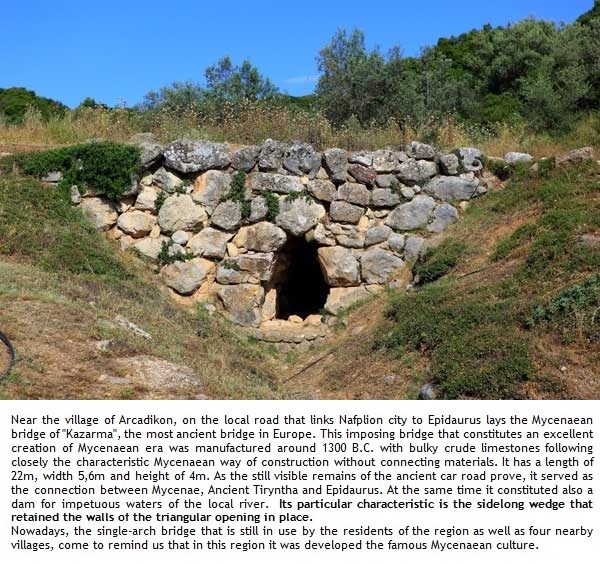
The Hellenic Society of Bridges Study is pleased to announce the second IBSBI Conference, “Innovations On Bridges And Soil-Bridge Interaction” IBSBI 2014, which will be held in Athens on 16, 17 and 18 October 2014. During 2014 we will be celebrating the 3300 years of the construction of the oldest bridge in Europe, the Mycenaean Bridge of Kazarma.
CONFERENCE TOPICS
· Aesthetics and architecture of bridges
· Bridge monitoring
· Design methods
· Fabrication and construction
· High performance materials
· New materials and their application on bridges
· International codes on bridges and comparison-loadings
· Seismic behaviour
· Vehicle-bridge interaction
· Old bridges and maintenance
· Stone bridges
· Long-span bridges
· Special forms of bridges
· Floating bridges
· Pedestrian bridges
· Sky-bridges
· Geotechnical problems
· Soil-structure interaction
· Stability problems – types and analysis
· Auxiliary and connected sub-structures
· Prefabrication
· Erection
· Computational techniques
· Experimental research
· Isolation and damping systems
· Aeroelasticity
Impact and explosion problems
· Multi-hazard loading on bridges
CALL FOR ABSTRACTS
The Scientific Committee invites all participants wishing to contribute to the scientific program to submit an abstract for oral presentation. Abstracts must be submitted by the deadline, January 10, 2014, to the following e-mail address:ibsbi2014@ntua.gr . Abstracts received after this date will not be considered.
Selected papers of high quality will be considered for publication in an extended form in the new International Journal IJBE after invitation ( http://www.ijbe.net/ ).
Excellent report by the Joint Research Center on various aspects of Eurocode 8 application inclussive of illustrative worked examples. Download
A complete list of Eurocode-related publications and presentations can be found here
The primary objective of the NEES@Illinois facility is to create a physical-analytical simulation environment whereby multi-axial, full-scale structure-foundation-soil systems can be subjected to complex loading and boundary conditions representing earthquake ground motion. Actions and responses are captured by state-of-the-art instrumentation and are processed and visualized using software developed by the site.
The major physical components of the facility are the reaction structure and the loading and boundary condition boxes, or LBCBs. Each LBCB is a self-reacting assembly of actuators, swivel joints, and control software capable of imposing any combination of six actions (forces and moments) and six deformations (displacements and rotations) on specimens connected to the loading platforms of the LBCBs. The site has three (3) large LBCBs, which can be used separately or in combination. When used together the LBCBs can be controlled independently, or they can be controlled to act as a single LBCB with increased load capacity. One of the key attributes of the MUST-SIM facility is that the LBCBs may be reconfigured to accommodate a vast array of testing needs. Examples of past tests and specifications of the test equipment will be presented during the webinar.
In addition to the full-scale facility, the NEES@Illinois site has a fully-operational, 1/5th-scale version of the MUST-SIM laboratory. This facility provides a realistic pre-test environment and serves as an education and outreach facility, but has also proven to be a worthy research facility in its own right.
Beyond the hardware aspects of the laboratory, NEES@Illinois has also developed the control systems and data acquisition systems used in the MUST-SIM. These systems will be covered in detail.
Hybrid simulation offers the most realistic testing to mimic actual system responses and NEES@Illinois is at the forefront of this area of research. 3-D hybrid simulation using UI-SimCor, a simulation coordinator developed at NEES@Illinois, will also be discussed.
This paper aims at developing the tools and strategy for assessing the seismic performance of the Byzantine and Roman remains in the city of Thessaloniki, in Greece, as a means to back-evaluate and enrich the seismic microzonation studies available for the Metropololitan area. At first, focus is made on the Walls that have been constructed at the end of the 4th century A.D. in the reign of Theodosius the Great and numerous blocks remain intact widespread within the city grid. The study particularly focuses on a specific Wall residuum, whose small dimensions, simple morpholgy (free-standing, rocking dominated masonry block), availability of nearby strong ground motion recordings and good knowledge of the underlying soil conditions, constitute a well-controlled case-study with the minimum possible numerical modeling (i.e., epistemic), record-to-record and material uncertainty. Secondly, the study focuses on an ancient Roman column, which was reestablished in 1969 after extensive archeological works. For both historical structures, a refined probabilistic dynamic analysis approach is adopted and the structural performance is examined, through a Monte Carlo Simulation scheme, for a number of realistic earthquake scenarios, accounting for geometric nonlinearities (i.e., sliding and rocking) and uncertainties in friction properties. Given the absence of damage, permanent displacement or collapse of the particular bodies, the probability of non-exceedance of a specific intensity measures (for the period that the structures remain intact) is assessed for the Wall residuum and the ancient colonnade, thus implicitly, for the city as a whole. It is also demonstrated that the fragility predicted without dully considering rocking and sliding of the two rigid blocks may lead to misleading results for particular sets of strong ground motions.
By NISEE
Hospital reconstruction and seismic strengthening provided continuous demand for construction design and engineering services in recent years. (See NISEE, Dec 9, 2011) In California, compliance with mandatory seismic performance objectives for critical health care facilities is largely supervised through the California Office of Statewide Planning and Development (OSPD). A hospital’s ability to function adequately after a large earthquake is dependent on the building’s structural components (a building’s primary load carrying system of foundation, columns, beams, floors, walls and roof), non-structural components (building elements such as ceilings, partitions, pipes, mechanical and electrical, that are not part of the structural load-bearing system), occupants (staff and patients) and contents (equipment, supplies, furnishings, etc.) remaining largely undamaged. Hospital serviceability after natural disaster relies on robust interconnectedness of lifeline systems (water, power, transportation, etc.) that support hospital services. The constitution of structural, non-structural and contents may provide unique seismic strengthening challenges for hospitals.
For all of the devastation caused by the 2011 earthquake/tsunami in Japan, the former, a 9.0 magnitude beast called “Tohoku,” could have claimed far more lives. The reason it didn’t? Since 2007, Japan has had an early warning system — conceived 10 years ago at Caltech — which California still hasn’t managed to set up. And while it only gives about a minute notice, it’s a minute Californians currently don’t have.
Until 2003, when Japanese seismologist Hiroo Kanamori and UC Berkeley’s Richard Allen published a study proving that early detection was possible, warning systems for earthquakes have relied on a concept that’s been around since the 19th century: detect the ground shaking at the fault line and send advanced notice to cities miles away through telegraphs, telephones, or modern telecommunications (depending on which century you’re in).
This system relies on the fact that electronic signals move much faster than seismic waves; For example, if you were in New York and on Twitter on August 23, 2011, you might have seen tweets from Washington DC about their earthquake just before the ground started shaking under your feet. As neat as that might have been (yay, new media!) retweeting is not a very good system for warning a city of impending seismic doom.
The new system put into place in Japan in 2007 detects earthquakes before they start shaking the Earth’s surface. Allen and Kanamori found that when tectonic plates shift, they release two forms of energy simultaneously, called p-waves and s-waves. S-waves cause all the damage on the surface. P-waves are harmless, but travel through the ground about twice as fast. So when Japan’s more than 1000 seismometers near their Pacific fault-line relayed p-wave data indicating a massive earthquake, the Japanese Meteorological Agency rang the alarm.
While this “early detection” still only gives about 60 seconds of warning, Japan was able to safely stop 11 500km/h bullet trains, disable 16,000 lifts, warn students to get under their desks and set off earthquake alarms across the country. Some 52 million Japanese received text alerts on their mobile phones. But that’s because Japan has the advanced warning system and a cultural awareness of the threat of earthquakes (for example, new iPhones bought in Japan come with quake-warning features built in).
California, on the other hand? Azeen Ghorayshi, in a great feature for the East Bay Express about Japan and California’s preparedness, says that California still has “next to nothing in terms of a public seismic warning system,” despite knowing how to build one for almost a decade and despite knowing the next “big one” is only matter of time. But building a statewide system is only a matter of politics and money, so it’ll probably be ready in no time. Meanwhile, here’s a $1 iPhone Seismometer app that you can make into your own DIY not-so-advanced warning system. [East Bay Express]
Ντοκιμαντέρ του ΣΚΑΪ καταγράφει μέσα από συγκλονιστικές εικόνες τον σεισμό των 9 Ρίχτερ, το τσουνάμι και την πυρηνική καταστροφή στην Φουκουσίμα της Ιαπωνίας. Αυτόπτες μάρτυρες αλλά και επιστήμονες που βίωσαν και μελετούν αντίστοιχα αυτό το σεισμό και τις συνέπειες που προκλήθηκαν στην Ιαπωνία μιλούν στην κάμερα. Τα 9 Ρίχτερ που χτύπησαν την Ιαπωνία την Παρασκευή 11 Μαρτίου 2011 αποτέλεσαν τον πέμπτο μεγαλύτερο σεισμό που έχει καταγραφεί στον κόσμο από το 1900. Το τσουνάμι που ακολούθησε έφερε και τις εφιαλτικές συνέπειες των 10.000 και πλέον νεκρών αλλά και χιλιάδων αγνοουμένων. Ολόκληρες πόλεις χάθηκαν και τίποτα δεν είναι πια ίδιο για τους Ιάπωνες αλλά και ολόκληρο τον κόσμο μετά την καταστροφή που υπέστη το πυρηνικό εργοστάσιο της Φουκουσίμα
The ISSMGE Technical Committee (TC 203) on “Earthquake Geotechnical Engineering and Associated Problems” organizes the International Conference on Earthquake Geotechnical Engineering From Case History to Practice in honor of Prof. Kenji Ishihara to be organized in Istanbul, Turkey during 17-19 June, 2013. Scope and topics include:
• Case histories on ground motion and site effects
• Soil investigation with field and laboratory testing
• Dynamic Characterisation and modelling
• Performance based design methodologies; Soil-structure interaction
• Physical modelling by shaking table and centrifuge tests
• Liquefaction; Lateral spreading
• Slope stability; Embankments, landfills and dams
• Shallow foundations; Pile foundations
• Retaining wall; Reinforced earth; Underground structures
More info: http://www.icege2013.org/
An “Earthquake Engineering” Special Session is organized within the framework of Fourteenth International Conference on Civil, Structural and Environmental Engineering Computing, to be held in Cagliari, Sardinia, Italy between 3-6 September 2013. It is organized by Anastasios Sextos, Assistant Professor at Aristotle University of Thessaloniki.
The Special Session focuses on recent advances in Computational Earthquake Engineering and Structural Dynamics. More specifically, it will encourage contributions related to the mitigation of seismic risk, the design and assessment of
earthquake resistant buildings and bridges, the assessment of
special and monumental structures, system identification and structural health
monitoring, performance-based engineering, seismic
isolation and control of structures, dynamic soil-structure
interaction, strong ground motion selection and scaling as well as
seismic wave propagation through the soil media. Papers related to new software applications, web-based engineering tools, frameworks for
hybrid simulation and distributed computing, knowledge-based & expert
systems, finite
element programs, numerical analysis pre- and post- processing
front-ends, data and metadata dissemination and management
systems, high performance, parallel and cloud computing schemes,
applications for mobile devices and tablets as well as GIS-based
visualization tools are also welcome.
It is envisioned that the Special Session will constitute an interesting forum for scientists using state-of-the-art computational methods and tools for Earthquake Engineering purposes.
Please note that the call for papers closes on the 5th December 2012 and abstracts may be submitted via the conference website: http://www.civil-comp.com/conf/
To encourage young researchers to attend the conference a 1000 Euro Young Researcher Best Paper Prize will be awarded to the best paper presented at each of the conferences. (For further details please see the conference website).
PEER and the EERI Northern California Chapter jointly hosted the EERI distinguished lecture “The New Normal for Natural Disasters” by Professor Tom O’Rourke from Cornell University on December 6, 2012 at UC Berkeley. This lecture discussed the effects of the Tohoku Earthquake and Tsunami, Canterbury Earthquake Sequence, and Hurricanes Katrina and Sandy with respect to their impact on regional and international economics, national practices for security and recovery, and worldwide energy policy. The recording is now posted at PEER’s YouTube channel with the intermittent audio static from the live webcast removed.
For those who would rather watch a live presentation, check out the opportunity towatch Professor O’Rourke live at Stanford University on March 7th as a part of the Shah Family Fund Distinguished Lecture Series.
Title: Earthquake Effects on Critical Infrastructure
Speaker: Tom O’Rourke, Thomas R. Briggs Professor of Engineering, Cornell University
Date: March 7, 2013
Time: 4:30pm (Reception at 4:00pm)
Location: Stanford University, Li Ka Shing Conference Center, LKS240/250 Directions
Abstract: The effects of the Tohoku Earthquake and Tsunami and Canterbury Earthquake Sequence are discussed with respect to their impact on regional and international economics, national practices for security and recovery, and worldwide energy policy. The lecture explains why these events require a fundamental re-thinking of the way we evaluate the risks of extreme events, as well as define and protect critical infrastructure. The impact of the Canterbury Earthquake Sequence on the underground infrastructure in Christchurch is explored with the use of an extraordinary GIS data set covering the effects of both liquefaction-induced permanent ground deformation and transient ground motion for 3 different earthquakes. Lessons learned from Christchurch for Wellington, NZ and San Francisco, CA are discussed. To address the need for protection against rare, high consequence events with limited financial resources, a strategy for improving infrastructure resilience is proposed.
10th National Conference on Earthquake Engineering
Frontiers of Earthquake Engineering
July 21-25, 2014
Anchorage, Alaska
Purpose
The Tenth U.S. National Conference on Earthquake Engineering, on the 50th Anniversary of theGreat Alaska Earthquake and Tsunami, will provide an opportunity for researchers and practitioners to share the latest knowledge and techniques to mitigate the damaging effects of earthquakes and tsunamis. This conference is being planned by the Earthquake Engineering Research Institute (EERI) in collaboration with the George E. Brown, Jr. Network for Earthquake Engineering Simulation (NEES). The conference will provide a unique environment to facilitate synergy between professionals and student researchers from the U.S. and around the world. This conference brings together professionals from a broad range of disciplines, including architecture, structural engineering, seismology, geology, geophysics, geotechnical engineering, business, public policy, social sciences, regional planning, emergency response planning, and regulation.
Call for Papers
Authors must submit abstracts and papers online. The deadline for submission of abstracts is March 31, 2013. The abstract collection system will open January 7, 2013. Additional detailed instructions are available at the conference website http://www.10ncee.org.
Special Sessions
The conference will include a small number of Special Sessions. Those interested in organizing and chairing a Special Session should contact either of the Technical Program committee co-chairs, Scott Ashford (Scott.Ashford@oregonstate.edu) or Greg Deierlein (ggd@stanford.edu), by February 15, 2013.
More Information
For more information view the 1st Announcement and Call for Papers at http://10ncee.org/wp-content/uploads/2012/12/10NCEE_Call-for-Papers.pdf or visit the conference website at http://www.10ncee.org.
The Earthquake Damage Database has been launched, featuring a visual and fully searchable catalogue of structural damage due to earthquake loading in Greece. The database contains more than 300 photos with seismic-related metadata, georeference (where availlable) and commentary and aims to act as a visual educational tool for undergraduate and young Civil Engineers. Currently it is available only in Greek.
Official Website: http://asptetk.civil.auth.gr/Pages/Home.aspx
For further info or in case you are interested to submit your earthquake damage-related photos please contact: asextos@civil.auth.gr
A minisymposium is organised in the framework of the 4th
International Conference on Computational Dynamics and Earthquake Engineering – COMPDYN 2013
(www.compdyn2013.org)
:
e-mail:asextos@civil.auth.gr description: The mini-symposium
will focus on recent advances in software development for
Earthquake Engineering and Structural Dynamics purposes. More specifically, it will encourage contributions that
will demonstrate new software applications, web-based engineering tools, frameworks for
hybrid simulation and distributed computing, knowledge-based & expert
systems, finite
element programs, numerical analysis pre- and post- processing
front-ends, data and metadata dissemination and management
systems, high performance, parallel and cloud computing schemes,
applications for mobile devices and tablets as well as GIS-based
visualization tools. Emphasis will be primarily (but not
exclusively) given to the application of the above software
systems towards the
mitigation of seismic risk, the design and assessment of
earthquake resistant buildings and bridges, the assessment of
special and monumental structures, system identification and structural health
monitoring, performance-based engineering, seismic
isolation and control of structures, dynamic soil-structure
interaction, strong ground motion selection and scaling as well as
seismic wave propagation through the soil media. It is envisioned that the Symposium will constitute a forum
on the recently developed earthquake-engineering-related software
that will facilitate the dissemination of knowledge and promote the
interaction and cooperation between the developers and the
end-users.
A complete list of other interesting Minisymposia can be found here
IN ORDER TO SUBMIT YOUR ABSTRACT PLEASE USE MINI-SYMPOSIUM CODE: MS-25-CZ
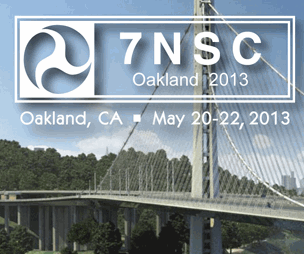
Oakland,
California has been selected as the site of the Seventh National
Seismic Conference on Bridges & Highways (7NSC). The event will be
held May 20-22, 2013 at the Oakland Marriott City Center. The conference
theme is “Bridge Resilience for Earthquakes and Other Natural Hazards,”
indicating a broad scope. There will be presentations and discussions
of multiple hazards that may affect the performance of highway
infrastructure. California was chosen by the Federal Highway
Administration (FHWA) to host this conference based on the state’s past
experience with earthquakes and the Department of Transportation’s
(Caltrans) leadership in the field. D2BS98J4TVJZ
The
2013 conference builds upon previous successful meetings that have been
held in San Diego, Sacramento, Portland, Memphis, San Mateo, and
Charleston, SC. Based on past trends, attendance is expected to exceed
400 and will include representatives from private engineering practice,
government, construction, academia, and industry. This conference is a
premier gathering of transportation officials responsible for addressing
and mitigating the impact of all hazards on our highway infrastructure.
On
Sunday May 19, 2013, an optional pre-conference technical workshop will
be held. The main program will be held over the next 2½ days with over
75 oral and poster presentations, discussion panels, and a student
design competition. Several internationally renowned keynote speakers
are being invited to share information about some of the major
earthquakes that have occurred in other parts of the world in recent
years. In addition, a special session is planned that will highlight the
design and construction of the soon to be complete San Francisco –
Oakland Bay Bridge, with emphasis on the unique self-anchored suspension
span. An optional technical tour will also be provided.
In
the days prior to the 7NSC, FHWA is planning to hold the First
International Bridge Seismic Workshop, also in Oakland. Dr. W. Phillip
Yen, FHWA Principal Bridge Engineer – Structural Dynamics, is Chairman
of the 7NSC and the International Workshop.
For more information, visit the conference web site.
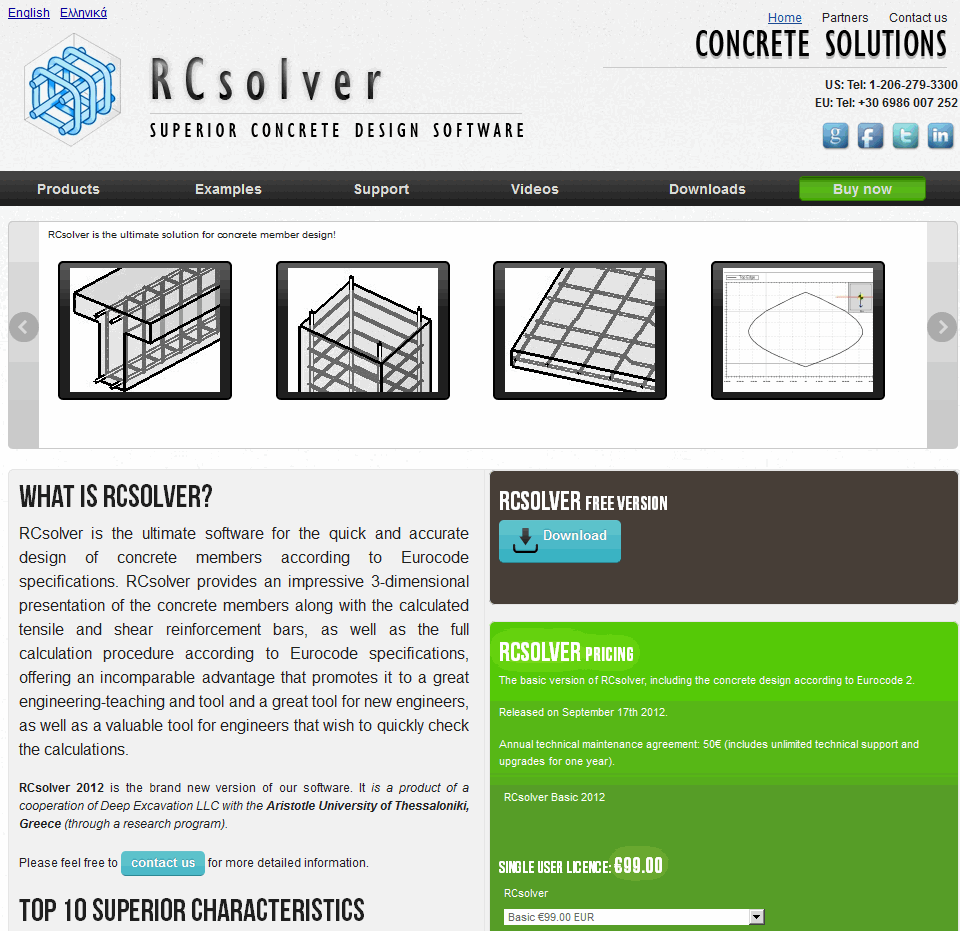
RCsolver is a software for
the quick and accurate design of concrete members according to Eurocode
specifications (primarily 2 and 8). RCsolver provides a 3-dimensional
presentation of the concrete members along with the calculated tensile
and shear reinforcement bars, as well as the full calculation procedure
according to Eurocode specifications, acting as a great engineering-teaching as well as a valuable tool for engineers that
wish to quickly check their calculations.
RCSolver free version is available at the software website