Σεισμική δόνηση αναστάτωσε τους κατοίκους της Φθιώτιδας, της Ευρυτανίας και άλλων περιοχών, ενώ έγινε ελαφρά αισθητή και στο λεκανοπέδιο της Αθήνας.
Οι πληροφορίες από το Γεωδυναμικό Ινστιτούτο θέλουν τη δόνηση να είναι ισχύος 5,2 Ρίχτερ, να σημειώθηκε στις 10.27 το πρωί του Σαββάτου και να εντοπίζεται στην περιοχή της Αμφίκλειας, στους πρόποδες του Παρνασσού, στο Νομό Φθιώτιδας, κοντά στα Καμένα Βούρλα και τη Λαμία, 130 χλμ. βόρεια βορειοδυτικά της Αθήνας και 100 νότια της Λάρισας. Νωρίτερα τα πρώτα ανεπίσημα στοιχεία (από την αμερικανική γεωλογική υπηρεσία) έκαναν λόγο για δόνηση ισχύος 5,1 βαθμών της κλίμακας Ρίχτερ. Το χαμηλό εστιακό βάθος που δίνουν τα στοιχεία αυτά, 10 χλμ. περίπου, είναι «ύποπτο» για πρόκληση ζημιών σε παλαιότερα οικήματα, ωστόσο δεν έχουν αναφερθεί άμεσα αξιόλογες ζημιές.
Ισχυρή σεισμική δόνηση εντάσεως 6,3 βαθμών της κλίμακας Ρίχτερ αναστάτωσε νωρίς τα ξημερώματα της Τρίτης τους κατοίκους της Ρόδου. Ο σεισμός το επίκεντρο του οποίου ήταν στη θαλάσσια περιοχή νότια του νοτίου άκρου του νησιού, έγινε αισθητός τόσο στα γύρω νησιά και τα τουρκικά παράλια, όσο και στις ανατολικές ακτές της Κρήτης, τη Σαντορίνη, τη Σάμο, ενώ έγινε ελαφρά αισθητός και στην Κύπρο. Το μεγάλο εστιακό βάθος, στα 71 χλμ., προστάτεψε τα κτίρια και τα δεκάδες ιστορικά μνημεία του νησιού από σημαντικές ζημιές.
Είναι διαθέσιμη η τελική τεχνική έκθεση του σεισμού της Ανδραβίδας στον σχετικό δικτυακό τόπο του Ινστιτούτου Αντισεισμικής Τεχνολογίας και Αντισεισμικών Κατασκευών.
Στην αναμονή του ισχυρού μετασεισμού συνεχίστηκε και χθες η καταμέτρηση των καταστροφών από τα 6,5 Ρίχτερ στη Δυτική Ελλάδα. Περίπου 1.800 κτίρια έχουν υποστεί σημαντικές ζημιές στην Αχαΐα, την Ηλεία και την Αιτωλοακαρνανία, με το 20% αυτών να χαρακτηρίζεται ετοιμόρροπο. Στο μεταξύ, υπογράφηκε χθες η απόφαση για την καταβολή των έκτακτων οικονομικών βοηθημάτων στους πληγέντες, ενώ σε λίγες ημέρες θα ακολουθήσει η ανακήρυξη της πληγείσας περιοχής σε σεισμόπληκτη και η έγκριση της επιδότησης ενοικίου. Στα σχολεία των σεισμόπληκτων περιοχών οι εξετάσεις των μαθητών της Γ΄ Λυκείου θα ολοκληρωθούν προφορικά. Το ΥΠΕΧΩΔΕ ανακοίνωσε χθες τα αποτελέσματα των πρωτοβάθμιων ελέγχων στις σεισμόπληκτες περιοχές, από 106 κλιμάκια μηχανικών. Σύμφωνα με τα νεότερα στοιχεία, στην Αχαΐα πραγματοποιήθηκαν 1.892 αυτοψίες και κρίθηκαν μη κατοικήσιμα 746 κτίρια, από τα οποία το 20% περίπου υπολογίζεται ότι θα κηρυχθεί κατεδαφιστέο στο δευτεροβάθμιο έλεγχο. Το ίδιο ποσοστό «κόκκινων» εντοπίζεται και στην Ηλεία, όπου πραγματοποιήθηκαν 2.372 αυτοψίες και κρίθηκαν μη κατοικήσιμα 1.042 κτίρια. Ακόμα 148 έλεγχοι πραγματοποιήθηκαν στους δήμους Αγρινίου και Αστακού Αιτωλοακαρνανίας και βρέθηκαν 46 σπίτια με σοβαρές ζημιές.
Πέντε μετασεισμοί μεγέθους από 3,7 μέχρι 4,1 Ρίχτερ σημειώθηκαν τη νύχτα της Τρίτης στην Ηλεία και την Αχαΐα.
“Είναι σημαντικοί αλλά όχι αυτός που περιμέναμε”, δήλωσε ο διευθυντής του Γεωδυναμικού Ινστιτούτου Γιώργος Σταυρακάκης.
Πρόσθεσε ότι για τον ίδιο θα είναι η πρώτη φορά στην καριέρα του που θα έχει σημειωθεί κύριος σεισμός 6,5 Ρίχτερ και δεν θα ακολουθήσει ένας μετασεισμός τουλάχιστον 5 Ρίχτερ.
Ο κ. Σταυρακάκης είπε ότι έχει συμβεί να σημειωθεί ο μετασεισμός ακόμη και σε σαράντα ημέρες από τον κύριο σεισμό.
Την ίδια ώρα, συνεχίζονται οι αυτοψίες σε σπίτια και σχολεία στους νομούς που επλήγησαν από τον ισχυρό σεισμό.
Στο νομό Ηλείας έχουν ελεγχθεί μέχρι στιγμής 621 κατοικίες, από την οποίες οι 264 κρίθηκαν μη κατοικήσιμες. Ογδόντα σπίτια κρίθηκαν κατεδαφιστέα στα χωριά Βάλμη Πηνεία και στο Νησί Βάρδας.
Στο νομό Αχαΐας ελέγχθηκαν 482 κτίρια από τα οποία τα 240 κρίθηκαν μη κατοικήσιμα, 70 κατεδαφίστεα και 170 επισκευάσιμα. Έλεγχοι έγιναν σε 133 σχολικά συγκροτήματα και στους δυο νομούς, εκ των οποίων τα 17 κρίθηκαν ακατάλληλα.
Είναι τεράστια η έκταση των ζημιών, αλλά θα έχει ολοκληρωθεί η καταγραφή τους μέχρι το τέλος τής εβδομάδας, δήλωσε στον ΣΚΑΪ, ο πρόεδρος του Τεχνικού Επιμελητηρίου Δυτικής Ελλάδας Γιώργος Ζεπάτος.
Η ισχυρή σεισμική δόνηση των 6,5 βαθμών της κλίμακας Ρίχτερ που σημειώθηκε το μεσημέρι στις 3.25 στην Ανδραβίδα κόστισε τη ζωή σε τουλάχιστον δύο ανθρώπους.
Πρόκειται για τον 43χρονο Ανδρέα Μπακούλια, ο οποίος ανασύρθηκε νεκρός από τα ερείπια κατοικίας στην Κάτω Αχαΐα και την 80χρονη Μαρίνα Πετροπούλου, η οποία τραυματίστηκε και κατέληξε στο νοσοκομείο, όπου μεταφέρθηκε, από ανακοπή καρδιάς.
Συνολικά στα νοσοκομεία της ευρύτερης περιοχής διακομίστηκαν 108 άτομα, 9 εκ των οποίων παραμένουν για νοσηλεία.
Η πυροσβεστική απεγκλώβισε συνολικά εννέα άτομα από τα χωριά Φώσταινα, Κάτω Αχαγιά, Βαρθολομιό και Αμαλιάδα.
Εν τω μεταξύ, πέντε πολυκατοικίες έχουν εκκενωθεί στην πόλη της Πάτρας λόγω ρωγμών.
Σε μία πρώτη αποτίμηση της κατάστασης στην Αχαΐα μετά το σεισμό των 6,5 βαθμών της κλίμακας Ρίχτερ, προχώρησε ο νομάρχης Δημήτρης Κατσικόπουλος.
Οι δήμοι που κυρίως επλήγησαν είναι οι: Δύμης, Μόβρης, Ωλενίας, Λαρισσού, Φαρρών, Τριταίας, Βραχνέικων, Παραλίας και ένα μέρος της Μεσσάτιδος, αφού έχουν καταρρεύσει δεκάδες σπίτια και πολλά άλλα έχουν υποστεί ζημιές. Επίσης, εκκενώθηκε μια κλινική στον Αλισσό στο δήμο Δύμης και οι νοσηλευόμενοι σε αυτό μεταφέρθηκαν σε ξενοδοχείο.
Συνεργεία της ΔΕΗ εργάζονται συνεχώς για την αποκατάσταση της ηλεκτροδότησης.
Kλειστά θα παραμείνουντη Δευτέρατα νηπιαγωγεία, τα δημοτικά, τα γυμνάσια , τα Λύκεια και το ΤΕΙ Πάτρας, ενώ το Πανεπιστήμιο Πάτρας θα παραμείνει κλειστό αύριο Δευτέρα και την Τρίτη.
Παράλληλα, δεν πραγματοποιούνται τα δρομολόγια των τρένων από Πάτρα για Πύργο, προκειμένου να γίνει έλεγχος από τα συνεργεία του ΟΣΕ σε γέφυρες και εγκαταστάσεις που άπτονται της ασφάλειας των συρμών.
Σε ετοιμότητα, βρίσκεται και η μονάδα αποκατάστασης καταστροφών της πολεμικής αεροπορίας.
Κατολισθήσεις υπάρχουν στην οδό από Πάτρα προς Καλάβρυτα μέσω Χαλανδρίτσας, στο 17ο χιλιόμετρο της εθνικής οδού Πατρών – Πύργου και σε σημεία της οδού από Πούντα προς Καλάβρυτα.
Σε όλα τα σημεία στάλθηκαν μηχανήματα για να καθαρίσουν το οδόστρωμα και να αποκαταστήσουν την κυκλοφορία.
Για τη φιλοξενία των αστέγων έχουν μισθωθεί ξενοδοχεία και έχουν σταλεί σκηνές, ενώ στην Πάτρα, όσοι τα σπίτια τους έχουν υποστεί ζημιές, θα φιλοξενηθούν σε ξενοδοχεία και πλοίο.
Στο χωριό Βάλμη Ηλείας οι ένοπλες δυνάμεις έδωσαν 10 σκηνές, 100 κρεβάτια και 200 κουβέρτες.
Ισχυρή σεισμική δόνηση 6,5 βαθμών της κλίμακας Ρίχτερ σημειώθηκε στις 3.26 το μεσημέρι στην Ανδραβίδα βορειοδυτικά της Πελοποννήσου. Σύμφωνα με το ΕΚΑΒ, υπάρχουν δύο ελαφρά τραυματίες στην Πάτρα, ενώ υλικές ζημιές σημειώθηκαν σε Πύργο, Πάτρα, Κυλλήνη, Λεχαινά και Αμαλιάδα. Σύμφωνα με τις πρώτες πληροφορίες, ζημιές σε κτίρια έχουν αναφερθεί στην Αχαΐα, την Ηλεία και την Αιτωλοακαρνανία. Σημειώθηκαν καταρρεύσεις σε ορισμένα παλαιά σπίτια, ενώ, δεν έχουν, μέχρι στιγμής αναφερθεί θύματα. Στην πυροσβεστική υπάρχει αναφορά ότι στο χωριό Φώσταινα Αχαϊας έχει καταρρεύσει ένα σπίτι – πιθανόν υπάρχουν εγκλωβισμένα άτομα – αλλά αυτή η αναφορά δεν έχει ακόμη επιβεβαιωθεί. Στην περιοχή οδεύει συνεργείο της Πυροσβεστικής. Εν τω μεταξύ, στο 74ο χμ της εθνικής οδού Τρίπολης – Αρχαίας Ολυμπίας, κοντά στο Λευκοχώρι Γορτυνίας πραγματοποιείται με δυσκολία η κυκλοφορία των αυτοκινήτων, λόγω πτώσης μεγάλου βράχου στο οδόστρωμα. Εξ άλλου, σύμφωνα με τις αναφορές προς το Γενικό Επιτελείο Αεροπορίας από το μεγάλο σεισμό έχουν διαπιστωθεί κάποιες ρωγμές σε κτίρια του αεροδρομίου της Ανδραβίδας, την επικινδυνότητα των οποίων θα ερευνήσουν οι αρμόδιοι μηχανικοί, ενώ δεν υπάρχει κανένα πρόβλημα με το διάδρομο προσγείωσης και απογείωσης των αεροσκαφών. Μιλώντας στο ΣΚΑΪ ο καθηγητής γεωλογίας Γεώργιος Λέκκας εκτίμησε ότι ο σεισμός ήταν μεγέθους άνω των 6 βαθμών της κλίμακας Ρίχτερ. Για 6,5 Ρίχτερ κάνει λόγο το Γεωδυναμικό Ινστιτούτο με επίκεντρο την Αχαΐα.
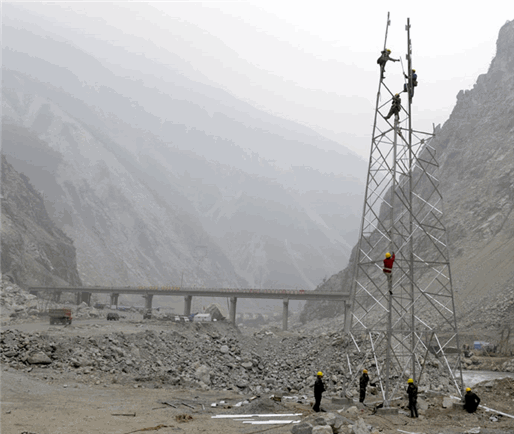
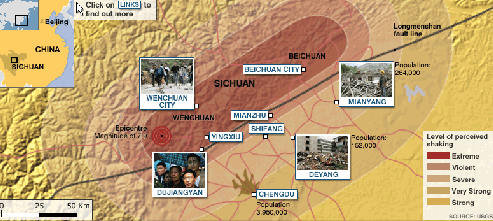
Στο δικτυακό τόπο www.elekkas.gr μπορείτε να πληροφορηθείτε για τα δεδομένα και τα νέα στοιχεία που σταδιακά προκύπτουν από την αποστολή στην επαρχία Sichuan της Κίνας, που επλήγει από τον καταστροφικό σεισμό των 7.9R της 12ης Μαΐου 2008.
ΕΛΕΥΘΕΡΟΣ ΤΥΠΟΣ, 12/5/2007
Ο καταστροφικότερος σεισμός που έχει χτυπήσει την Κίνα εδώ και τρεις δεκαετίες άφησε πίσω του περισσότερους από 8.500 νεκρούς σε μία και μόνη περιοχή, ενώ οι τραυματίες ξεπερνούν τους 10.000, όπως μετέδωσε το επίσημο πρακτορείο «Νέα Κίνα», επικαλούμενο τις αρχές της επαρχίας Σετσουάν.
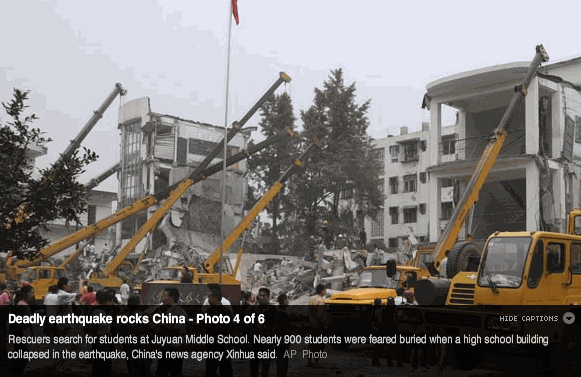
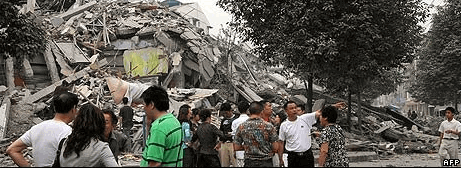
Σύμφωνα με τα κρατικά μέσα ενημέρωσης, από το σεισμό κατέρρευσαν οκτώ σχολεία και δύο εργοστάσια. Στην επαρχία Σετσουάν ο επίσημος απολογισμός των θυμάτων στις 22:00 (τοπική ώρα) έκανε λόγο για 8.533 νεκρούς. Μόνο στην Αυτόνομη Περιφέρεια Μπεϊτσουάν Τσιανγκ της ορεινής αυτής επαρχίας υπολογίζεται ότι οι νεκροί φτάνουν μέχρι και τους 5.000. Το 80% των κτηρίων στην Περιφέρεια Μπεϊτσουάν έχει καταρρεύσει. Η περιοχή αυτή έχει πληθυσμό 161.000 κατοίκους, κάτι που σημαίνει ότι ένας στους δέκα κατοίκους σκοτώθηκε ή τραυματίστηκε. Εκατοντάδες άνθρωποι έχουν θαφτεί στα ερείπια της πόλης Σιφάνγκ, επίσης στο Σετσουάν, καθώς πολλά σχολεία, εργοστάσια και κοιτώνες κατέρρευσαν. Η ισχυρότατη δόνηση σημειώθηκε ενώ τα παιδιά βρίσκονταν ακόμη στα σχολεία του και πολλά από αυτά, μαζί με τους δασκάλους τους, δεν πρόλαβαν να βγουν από τα κτήρια. Υπολογίζεται ότι περίπου 900 έφηβοι είναι εγκλωβισμένοι κάτω από τα χαλάσματα ενός τριώροφου σχολείου στην πόλη Ντουτιζανγκιάν του Σετσουάν. Κάτοικοι της πόλης, με τη βοήθεια γερανών, έχουν καταφέρει να βγάλουν από τα συντρίμμια πολλά από τα παιδιά. Στην ίδια πόλη έχει καταρρεύσει και ένα νοσοκομείο, σύμφωνα πάντα με το πρακτορείο «Νέα Κίνα». Άλλα πέντε παιδιά σκοτώθηκαν και 120 τραυματίστηκαν όταν κατέρρευσαν δύο δημοτικά σχολεία σε αγροτικές περιοχές του Τσονγκτσίνγκ. Άλλοι 19 μαθητές και δάσκαλοι παραμένουν εγκλωβισμένοι. Το Τσονγκτσίνγκ είναι μια περιοχή με 30 εκατομμύρια κατοίκους που γειτονεύει με το Σετσουάν. Στην πρωτεύουσα Τσενγκτού, μια πόλη 10 εκατομμυρίων κατοίκων, έχουν χάσει τη ζωή τους 45 άνθρωποι και άλλοι 600 τραυματίστηκαν, εκ των οποίων οι 58 είναι σε κρίσιμη κατάσταση. Τόσο το αεροδρόμιο όσο και ο σιδηροδρομικός σταθμός της πόλης έχουν διακόψει τη λειτουργία τους. Ο αριθμός των θυμάτων αναμένεται ότι θα αυξηθεί δραματικά καθώς οι αρχές και οι διασώστες προσπαθούν ακόμη να επικοινωνήσουν με ορισμένες περιοχές με τις οποίες έχει διακοπεί η τηλεφωνική σύνδεση από την ώρα του σεισμού. Οι αρχές της επαρχίας Άμπα εξάλλου ανέφεραν ότι έχουν καταστραφεί πολλοί αυτοκινητόδρομοι.
Το επίκεντρο του σεισμού, που σύμφωνα με το αμερικανικό Γεωλογικό Ινστιτούτο προερχόταν από βάθος 10 χιλιομέτρων, εντοπίστηκε στην επαρχία Ουεντσουάν, μια ορεινή περιοχή 100.000 κατοίκων, όμως ήταν τόσο ισχυρός που έγινε αισθητός μέχρι και την Μπανγκόκ, την πρωτεύουσα της Ταϊλάνδης. Άλλοι δέκα άνθρωποι σκοτώθηκαν και 14 τραυματίστηκαν σοβαρά στην επαρχία Γκανσού ενώ στην επαρχία Γιουνάν ένα πεντάχρονο κοριτσάκι έχασε τη ζωή του όταν έπεσε σε μια λιμνούλα. Στην περιοχή αυτή υπέστησαν ζημιές 3000 σπίτια. Να σημειωθεί τέλος ότι η Διοίκηση Δασών ανακοίνωσε ότι δεν έχει καμία πληροφόρηση για το τι έχει συμβεί στο δρυμό του Γουολόνγκ της επαρχίας Σετσουάν, το ένα από τα δύο μεγάλα κέντρα προστασίας των γιγαντιαίων πάντα στην περιοχή. Το κέντρο αυτό απέχει μία ώρα από το Τσενγκτού, την πρωτεύουσα του Σετσουάν, όμως έχει διακοπεί η τηλεφωνική σύνδεση. Στο Τσενγκτού και στο Γουολόνγκ ζουν συνολικά 250 πάντα. Οι κινεζικές αρχές προειδοποίησαν για τον κίνδυνο και νέων σεισμών στο Πεκίνο γράφει στην ηλεκτρονική της έκδοση η εφημερίδα «Λαϊκή Ημερησία», επικαλούμενη την Εθνική Σεισμολογική Υπηρεσία.
Σεισμική δόνηση μεγέθους 4,7 βαθμών της κλίμακας Ρίχτερ σημειώθηκε λίγο μετά τις 11 το πρωΐ της Παρασκευής με επίκεντρο τον υποθαλάσσιο χώρο ανατολικά της Σάμου.
Η δόνηση εντάσσεται στη φυσιολογική σεισμική δραστηριότητα της περιοχής.
Τα ξημερώματα σεισμός 4,4 βαθμών της κλίμακας Ρίχτερ σημειώθηκε βόρεια της Κρήτης.
Σεισμική δόνηση μεγέθους 4,4 βαθμών της κλίμακας Ρίχτερ έγινε αισθητή στις 03:30 τα ξημερώματα στην ευρύτερη περιοχή της πρωτεύουσας. Το επίκεντρο της δόνησης εντοπίζεται 16 χιλιόμετρα βόρεια της Αθήνας, στην περιοχή της Φυλής.
Ο «χορός» των Ρίχτερ που χτύπησε χθες το νοτιοδυτικό τμήμα της Πελοποννήσου ανέβασε στα ύψη την αγωνία των κατοίκων και ταυτόχρονα αναζωπύρωσε τη διαμάχη των σεισμολόγων σχετικά με την πρόγνωση των σεισμών
«E»
Ξυπνώντας μνήμες καταστροφικών σεισμών που στοίχισαν τη ζωή εκατοντάδων ανθρώπων και επέφεραν εκτεταμένες υλικές ζημιές, ο Εγκέλαδος χτύπησε χθες το μεσημέρι την Πελοπόννησο.
Με μια δόνηση που απελευθέρωσε, όπως επισημαίνουν οι επιστήμονες, ενέργεια 12 φορές μεγαλύτερη από την ενέργεια που είχε απελευθερώσει η ατομική βόμβα στη Χιροσίμα.
Με μια πρωτοφανή διάρκεια, η ισχυρή σεισμική δόνηση έντασης 6,7 Ρίχτερ που εκδηλώθηκε στον υποθαλάσσιο χώρο 30 χιλιόμετρα νότια από τη Μεθώνη, προκάλεσε τρόμο και αναταραχή στους κατοίκους της Μεσσηνίας και της Αρκαδίας, ενώ έγινε ιδιαίτερα αισθητός σε ολόκληρη τη νότιο Ελλάδα, την Αιτωλοακαρνανία, αλλά και την Αττική.
Τα ξένα ειδησεογραφικά δίκτυα ανέφεραν ότι τον σεισμό ένιωσαν επίσης οι κάτοικοι της νοτίου Ιταλίας αλλά και του Καϊρου, επιβεβαιώνοντας κατά πολλούς την πρόβλεψη για σεισμό μεγαλύτερο των 6 Ρίχτερ που είχε πραγματοποιήσει η ερευνητική ομάδα του κ. Βαρώτσου και την οποία είχε αποκαλύψει το «Εθνος» την προηγούμενη Κυριακή.
Τα σχολεία των νομών της Πελοποννήσου εκκενώθηκαν μετά την εκδήλωση του ισχυρού σεισμού, οι κάτοικοι παρέμειναν έξω από τα σπίτια τους φοβούμενοι το ενδεχόμενο επανάληψης του φαινομένου, ενώ βλάβη προκλήθηκε σε διακόπτη διανομής ρεύματος 20.000 βολτ που τροφοδοτεί τη Μεγαλόπολη.
Οπως επισημαίνει ο διευθυντής Ερευνών του Γεωδυναμικού Ινστιτούτου, δρ Γεράσιμος Παπαδόπουλος, η χθεσινή δόνηση ανήκει στην πιο επικίνδυνη κατηγορία σεισμών, καθώς το επίκεντρό της εντοπίζεται στο ακριβές σημείο σύγκρουσης της αφρικανικής με την ευρασιατική λιθοσφαιρική πλάκα.
Σύμφωνα με τους σεισμολόγους, η δόνηση προήλθε από τη δυτική πλευρά του ελληνικού σεισμικού τόξου που εκτείνεται από την Κεφαλονιά, τη Ζάκυνθο, τη Δυτική Πελοπόννησο, την Κρήτη μέχρι και τα Δωδεκάνησα, ενώ εκδηλώθηκε σε μια περιοχή με πολύ έντονη σεισμικότητα, την ισχυρότερη, ίσως, στη Μεσόγειο.
Το ευτύχημα ότι στην ευρύτερη περιοχή δεν κατεγράφησαν σοβαρές ζημιές οφείλεται, όπως τονίζουν οι επιστήμονες, στο γεγονός ότι η σεισμική δόνηση ήταν υποθαλάσσια με εστιακό βάθος τα 30 χιλιόμετρα, ενώ η απόσταση του επικέντρου από τις κατοικημένες περιοχές ήταν σχετικά μεγάλη.
Παρ όλ αυτά, ο φόβος για το τι πρόκειται να ακολουθήσει αναζωπυρώθηκε μετά την εκδήλωση δεύτερης σεισμικής δόνησης, μεγέθους 6,4 Ρίχτερ, λίγο μετά τις 2 το μεσημέρι. Ισχυρή μετασεισμική δόνηση μεγέθους 5,1 Ρίχτερ σημειώθηκε και στις πεντέμισι το απόγευμα. «Ψυχραιμία»Οι σεισμολόγοι συστήνουν στους κατοίκους της Πελοποννήσου να παραμείνουν ψύχραιμοι, ενώ υποστηρίζουν ότι η δόνηση των 6,7 Ρίχτερ ήταν κατά πάσα πιθανότητα ο κύριος σεισμός.
«Αρχικά δεν είχαμε καμία μετασεισμική δραστηριότητα και αυτό θα μπορούσε να μας ανησυχήσει. Ο δεύτερος σεισμός, όμως, ενισχύει το ενδεχόμενο η πρώτη δόνηση να αποτελούσε τον κύριο σεισμό», σημείωσε ο κ. Παπαδόπουλος, ενώ ο διευθυντής του Γεωδυναμικού Ινστιτούτου κ. Σταυρακάκης είχε χαρακτηρίσει από νωρίς αναμενόμενη την έντονη μετασεισμική δραστηριότητα.
Σημειώνεται ότι η επίσημη ανακοίνωση του Γεωδυναμικού Ινστιτούτου έκανε λόγο για ένταση 6,5 Ρίχτερ, όμως, όπως προέκυψε στη συνέχεια από μεταγενέστερες εκτιμήσεις, ο σεισμός ήταν λίγο μεγαλύτερος απ ό,τι είχε αρχικά εκτιμηθεί.
ΚΑΤΕΡΙΝΑ ΡΟΒΒΑ rovva@pegasus.gr
ΑΠΟΚΛΙΣΗ 6,5 Ρίχτερ ανακοίνωσαν αρχικά οι σεισμολόγοι
Δίδυμους σεισμούς με μικρή απόκλιση στο επίκεντρο ανακοίνωσε το Εργαστήριο Γεωφυσικής του Αριστοτελείου Πανεπιστημίου Θεσσαλονίκης, αναφορικά με τα 6,7 και 6,4 Ρίχτερ που ταρακούνησαν χθες το πρωί την Πελοπόννησο, με επίκεντρο 35 χιλιόμετρα νότια της Μεθώνης.
Κι ενώ το Πανεπιστήμιο Θεσσαλονίκης έσπευσε να συνταχθεί με το αντίστοιχο εργαστήριο της Αθήνας και να ανακοινώσει ως μέγεθος για τον πρώτο σεισμό που σημειώθηκε στις 12.09 το μεσημέρι, τα 6,5 Ρίχτερ, λίγο μετά τον δεύτερο σεισμό των 6,4 Ρίχτερ ο αναπληρωτής καθηγητής Γεωφυσικής, Κώστας Παπαζάχος, ανακοίνωσε ότι το μέγεθος του πρώτου σεισμού ήταν 6,7 Ρίχτερ, όπως ακριβώς το έδωσε και το Ευρωμεσογειακό Σεισμολογικό Κέντρο που εδρεύει στο Παρίσι.
«Αρχικά δόθηκε ως μέγεθος το 6,5 Ρίχτερ, αλλά μεταγενέστερες εκτιμήσεις που έχουν γίνει όχι μόνο από εμάς, αλλά και από την Αθήνα, από την Πάτρα και από τα κέντρα του εξωτερικού, δείχνουν ότι ο σεισμός ενδεχομένως είναι λίγο μεγαλύτερος, της τάξης του 6,7 Ρίχτερ. Δυστυχώς αυτά γίνονται επειδή οι πρώτες εκτιμήσεις βασίζονται σε μια προκαταρκτική μέτρηση και απαιτούνται αναλύσεις, οι οποίες παίρνουν ώρα», εξήγησε ο κ. Παπαζάχος, προσθέτοντας ότι αμερικάνικο κέντρο είχε δώσει ως μέγεθος τα 7,1 Ρίχτερ και στη συνέχεια το διόρθωσε στα 6,7 Ρίχτερ.
«Φαίνεται ότι ο σεισμός είναι λίγο μεγαλύτερος από ό,τι αρχικά εκτιμήθηκε, αλλά αυτή η απόκλιση δεν είναι σοβαρή. Πρακτικά μιλάμε για έναν πολύ ισχυρό σεισμό περίπου στο μέγεθος, το οποίο ανακοινώθηκε αρχικά», τόνισε ο κ. Παπαζάχος. Εκείνο που προβληματίζει τους επιστήμονες είναι η φτωχή μετασεισμική ακολουθία, καθώς μετά τα 6,7 Ρίχτερ δεν ακολούθησαν ισχυροί μετασεισμοί παρά μόνο ο δεύτερος σεισμός των 6,4 Ρίχτερ στις 2.08 το μεσημέρι.
«Εχουμε ένα μεγάλο γεγονός και μία ιδιαίτερα φτωχή μετασεισμική ακολουθία με λίγους μετασεισμούς, ο μεγαλύτερος από τους οποίους δεν ξεπερνά τα 4,5 Ρίχτερ μέχρι το απόγευμα. Είναι ελάχιστη η μετασεισμική δραστηριότητα και πρέπει να παρακολουθούμε το φαινόμενο», είπε στο «Εθνος» ο επίκουρος καθηγητής Γεωφυσικής στο Α.Π.Θ. Μανόλης Σκορδύλης, ωστόσο συμπλήρωσε ότι «τα 6,7 Ρίχτερ είναι αρκετά μεγάλο μέγεθος για να θεωρήσει κανείς ότι πρόκειται για προσεισμό».
Σύμφωνα με τον κ. Σκορδύλη, το εστιακό βάθος των 30-40 χιλιομέτρων χαρακτηρίζει τον σεισμό ως επιφανειακό, ενώ το γεγονός ότι το επίκεντρο ήταν στη θάλασσα έσωσε κατοικημένες περιοχές. «Το ότι το επίκεντρο ήταν σε απόσταση 60 χιλιομέτρων από την πόλη της Καλαμάτας και ο σεισμός υποθαλάσσιος, περιόρισαν σημαντικά τις επιπτώσεις από τη δόνηση αυτή», μας είπε χαρακτηριστικά.
Το ακριβές επίκεντρο του σεισμού εντοπίζεται στο δυτικό άκρο του ελληνικού τόξου, το οποίο είναι μια ιδιαίτερα ενεργή περιοχή, εκεί όπου γίνεται η σύγκρουση της αφρικανικής με την ευρασιατική πλάκα και για τους ειδικούς οι σεισμοί πάνω στο τόξο του Αιγαίου είναι κάτι απόλυτα φυσιολογικό.
ΜΑΡΙΑ ΡΙΤΖΑΛΕΟΥ
Το επίκεντρο των δονήσεων εντοπίζεται 60 χιλιόμετρα νότια νοτιοδυτικά της Καλαμάτας. Ανακούφιση εκφράζουν οι σεισμολόγοι μετά τον ισχυρό μετασεισμό ισχύος 6,4 Ρίχτερ που σημειώθηκε στον ίδιο εστιακό χώρο και στο ίδιο επίκεντρο, στη θαλάσσια περιοχή της Μεθώνης, με την κυρίως σεισμική δόνηση ισχύος 6,5 Ρίχτερ.
Η κυρίως σεισμική δόνηση, έγινε αισθητή σε όλη τη νότια Ελλάδα και σημειώθηκε στις 12:09. Όσον αφορά το μετασεισμό, που σημειώθηκε στις 14:08, οι σεισμολόγοι τονίζουν ότι είναι κάτι το θετικό. “Μας λύνει τα χέρια καθώς το φαινόμενο εκτονώνεται” εξήγησε στο ΣΚΑΪ ο διευθυντής του Γεωδυναμικού Ινστιτούτου Γιώργο Σταυρακάκη.
Αυξημένη επιφυλακή στις παραθαλάσσιες περιοχές της Μεσσηνίας για τις επόμενες 24ώρες συνέστησε μέσω του ΣΚΑΪ ο Κώστας Συνολάκης, καθηγητής φυσικών καταστροφών του Πανεπιστημίου Κρήτης.
Όπως είπε, τυχόν υποθαλάσσια κατολίσθηση μπορεί να δημιουργήσει τοπικά παλιρροϊκό κύμα.
Ψυχραιμία συνέστησε και ο υπουργός ΠΕΧΩΔΕ Γιώργος Σουφλιάς.
Εξάλλου, σύμφωνα με το νομάρχη Μεσσηνίας μικροζημιές έχουν σημειωθεί σε ιδιωτικά κτίρια αλλά και σχολεία στην περιοχή της Πυλίας.
Με απόφαση του υπουργείου Παιδείας Ευρυπίδη Στυλιανίδη δεν θα λειτουργήσουν οι απογευματινές βάρδιες των σχολείων στη Μεσσηνία.
Κλειστά θα παραμείνουν την Παρασκευή τα σχολεία της Μεσσηνίας και της Αρκαδίας προκειμένου να ελεγχθούν.
 Οι πληροφορίες από το Γεωδυναμικό Ινστιτούτο θέλουν τη δόνηση να είναι ισχύος 5,2 Ρίχτερ, να σημειώθηκε στις 10.27 το πρωί του Σαββάτου και να εντοπίζεται στην περιοχή της Αμφίκλειας, στους πρόποδες του Παρνασσού, στο Νομό Φθιώτιδας, κοντά στα Καμένα Βούρλα και τη Λαμία, 130 χλμ. βόρεια βορειοδυτικά της Αθήνας και 100 νότια της Λάρισας. Νωρίτερα τα πρώτα ανεπίσημα στοιχεία (από την αμερικανική γεωλογική υπηρεσία) έκαναν λόγο για δόνηση ισχύος 5,1 βαθμών της κλίμακας Ρίχτερ. Το χαμηλό εστιακό βάθος που δίνουν τα στοιχεία αυτά, 10 χλμ. περίπου, είναι «ύποπτο» για πρόκληση ζημιών σε παλαιότερα οικήματα, ωστόσο δεν έχουν αναφερθεί άμεσα αξιόλογες ζημιές.